Stories · History · Sports Cards
The Card That Wasn't Supposed to Exist: The T206 Honus Wagner Story
A tobacco-pack giveaway became the most famous baseball card ever printed. Its scarcity is still debated, and its best-known copy carries a confession of trimming.
By The Grail Hunt · September 1, 2026 · 6 min read
In the years around 1910, a baseball fan buying a pack of cigarettes in America often got a small bonus tucked inside: a stiff piece of cardboard, about the size of a playing card cut in half, printed with a color portrait of a ballplayer. The cards helped keep the soft packs from being crushed, and they gave smokers a reason to keep buying the same brand. Hundreds of players appeared in the set. One of them, the Pittsburgh Pirates shortstop Honus Wagner, turned up in such small numbers that his card would become the most famous in the hobby.
The tobacco trust and its cardboard
The set collectors now call T206 was issued by the American Tobacco Company, the enormous combine that dominated the American cigarette business in the early twentieth century, from roughly 1909 to 1911. The cards were distributed in packs of many of the company's brands, and the backs advertised whichever brand the card was packed with, names such as Piedmont and Sweet Caporal among them. The same front image can therefore be found with a variety of backs, and collectors of the set track those combinations closely.
The name T206 itself came later. It is a catalog number assigned by Jefferson Burdick, the pioneering collector whose American Card Catalog organized early trading cards into categories. The "T" marked twentieth-century tobacco issues. Burdick's own collection, including T206 cards, eventually went to the Metropolitan Museum of Art in New York.
T206 is a vast set, with more than 500 different cards when variations are counted, and the cards were printed in large quantities. Many of them survive in the hands of collectors today. That abundance is exactly what makes the Wagner card so unusual. It was pulled from production early, and far fewer were made than for the stars around him.
Why so few Wagners?
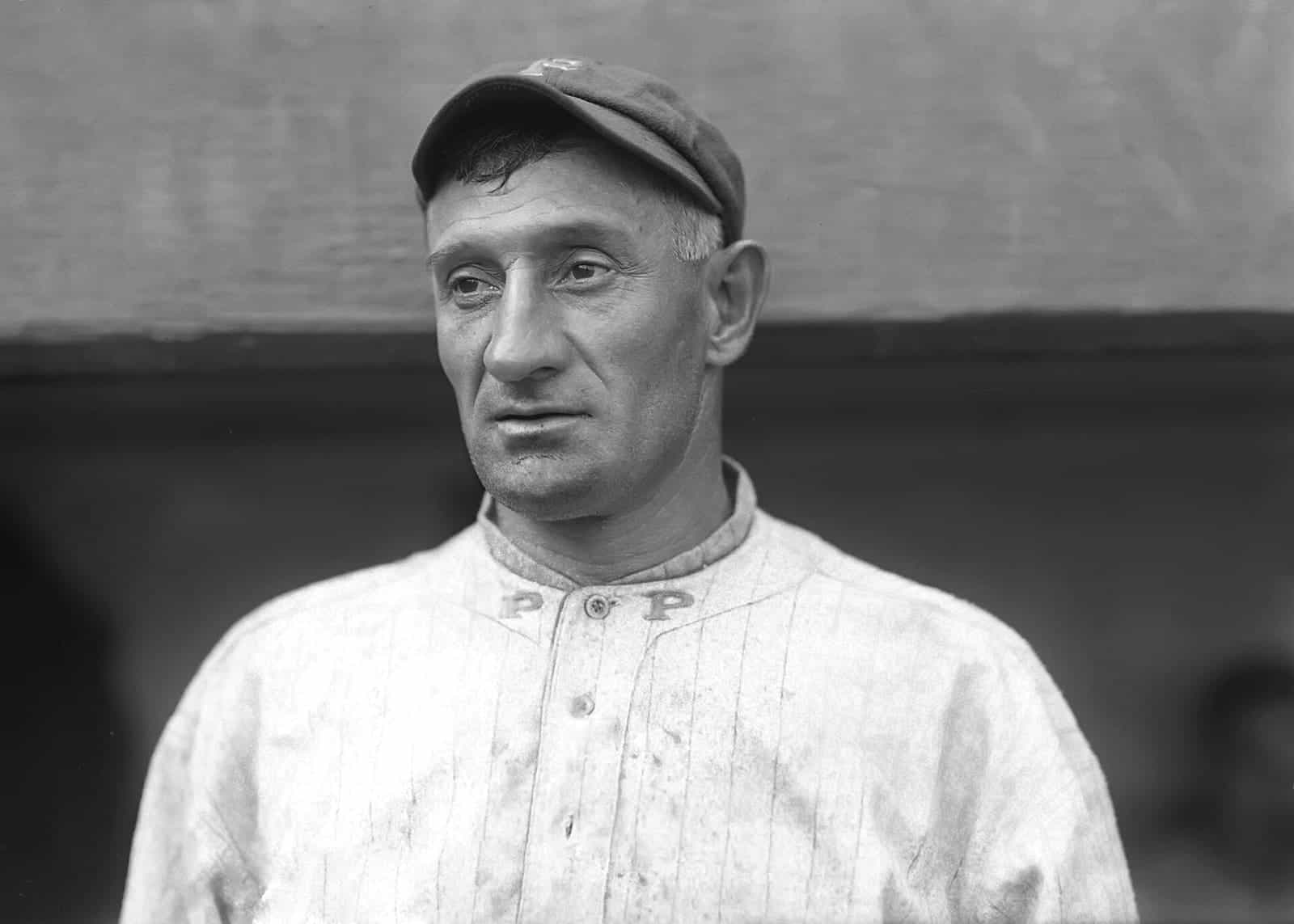
Honus Wagner was one of the best players of his generation, a hitter and fielder who would be part of the first class elected to the Baseball Hall of Fame in 1936. Anyone putting together a set of star ballplayers would have wanted him. Yet his card was distributed only in tiny numbers before it was withdrawn. Estimates of how many genuine examples survive vary, but they are usually placed at fewer than 60.
In a set printed by the millions, the card of one of baseball's greatest players survives in numbers small enough to be counted individually.
The reason is one of the great open questions in the hobby. The most popular explanation holds that Wagner objected to his image being used to sell cigarettes, perhaps out of concern that children would buy tobacco to get his card. That story has been told for generations, and it fits the image of Wagner as a decent, modest figure. It is not, however, settled fact.
A competing explanation argues that the dispute was about money: that Wagner, or someone acting for him, wanted to be paid for the use of his likeness and the company declined to meet his terms. Supporters of this view point out that Wagner's image appeared in other commercial settings during his career, which complicates the picture of a principled refusal. No surviving document has resolved the matter to everyone's satisfaction, and historians of the hobby continue to treat both accounts as possibilities.
What is clear is the result. The card existed, it was distributed briefly, and then it stopped. The rarity that followed turned a small piece of tobacco advertising into a legend. By the middle of the twentieth century, collectors already regarded the Wagner as the key to the T206 set, and its reputation only grew from there.
The most famous copy
Of the surviving Wagners, one stands apart. It is unusually sharp, with strong color, crisp corners and edges that look almost new, far better than the worn, creased and rounded examples typical of a card that spent its early life in a cigarette pack. It changed hands among dealers and collectors in the 1980s and then became a public spectacle in 1991, when it was bought at auction by hockey star Wayne Gretzky and Los Angeles Kings owner Bruce McNall. The card has been known as the "Gretzky Wagner" ever since.
Around that time, the card was graded by PSA, a then-new grading company, and received a high numerical grade for a card of its age. Its condition helped cement the Wagner's status as the ultimate trophy card. In the years that followed, it was sold again several times, including a period in the mid-1990s when it was used as the prize in a promotional giveaway run with the retailer Walmart, and it went on to set records each time it traded.
Almost from the beginning, some hobby veterans questioned whether a card with such remarkably clean, straight edges could be entirely original. The question hung over the card for years, discussed in the hobby press and among dealers without a definitive answer.
A confession in court
The answer came from inside the story. Bill Mastro, a prominent dealer who had handled the card in the 1980s and later founded a major sports memorabilia auction house, was charged in a federal fraud case in Chicago involving practices at his auction company. In 2013 he pleaded guilty to a mail fraud charge. As part of his plea, he admitted that he had trimmed the sides of the famous Wagner card before selling it, cutting its edges to make it look sharper.
Trimming a card is one of the most serious forms of alteration in the hobby, because it disguises wear and can dramatically change how a card is perceived and graded. Mastro's admission confirmed what the skeptics had suspected and placed the most famous card in the world at the center of a lesson about alteration. The card still exists and is still known by name, but its history now includes a documented instance of tampering that every serious collector knows about.
What it means for collectors
For most collectors, owning a T206 Wagner is not a practical goal. The T206 set as a whole, though, remains one of the most widely collected vintage issues, precisely because so many of its cards survive. Common players, Hall of Famers and the many back variations offer a way into the tobacco era, and the set rewards patient study of printing, back advertising and condition.
The Wagner story also carries a warning that applies to every vintage card. Sharp edges on an old card are desirable, but they can also be a sign that someone has cut them. Collectors measure cards against known dimensions, look for edges that are too clean or unnaturally straight, and compare the borders on each side for consistency. Grading companies aim to catch trimming, but the Gretzky Wagner shows that even a celebrated card can pass through the system with an alteration that later comes to light.
Finally, the card is a reminder that provenance matters. A card's documented path through collections and sales can support its authenticity or raise questions about it. The most famous baseball card in history turned out to be a lesson in why collectors ask where a card has been, not just how it looks today.
More stories