Stories · History · Vinyl Records
Blue Note Records: How Two Berliners Built Jazz's Most Coveted Label
A German émigré, his photographer friend, an optometrist with a microphone and a designer with a type case created the sound and look collectors still chase.
By The Grail Hunt · September 15, 2026 · 6 min read
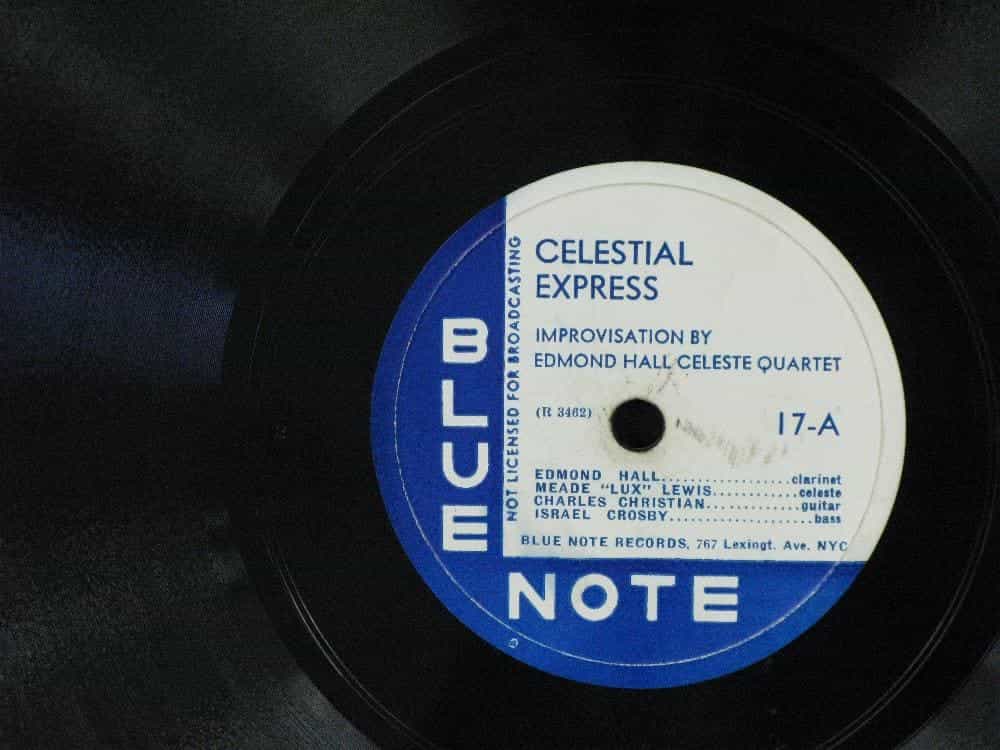
In December 1938, Carnegie Hall hosted a concert called From Spirituals to Swing, a sweeping survey of Black American music staged by the producer John Hammond. In the audience was Alfred Lion, a young German émigré who had fallen for jazz as a teenager in Berlin. Among the performers were the boogie-woogie pianists Albert Ammons and Meade Lux Lewis. A few weeks later, in January 1939, Lion brought the two of them into a New York studio and recorded them. That session is generally counted as the birth of Blue Note Records, a label that would go on to define how modern jazz sounded, how it looked, and, decades later, what record collectors would cross oceans to find.
A label built on friendship
Lion did not build Blue Note alone for long. Francis Wolff, a friend from his Berlin youth, left Germany and arrived in New York in 1939, joining Lion in the business. The two were an unusual pair of record men. They were fans first, and the label reflected their taste rather than any calculation about the charts. In its early years Blue Note recorded traditional jazz and boogie-woogie, and it earned a reputation among musicians for treating them well. Lion was known for paying musicians for rehearsal time before a session, something far from standard in the industry at the time, and the practice is often credited with the polish of Blue Note records.
Wolff had another talent that would become part of the label's identity. He was a keen photographer, and at recording sessions he moved around the room with his camera, capturing musicians mid-phrase, deep in thought, smoking between takes. Thousands of these images survive. They are intimate and unposed, shot by someone the players knew and trusted, and they would soon end up on the front of the records themselves.
By the late 1940s and into the 1950s, Blue Note had shifted toward the new music. It recorded Thelonious Monk and Bud Powell in the bebop era, and in the 1950s it became the home of what came to be called hard bop, with artists such as Art Blakey, Horace Silver, Lee Morgan, Hank Mobley and many others passing through its sessions.
The living room in Hackensack
The sound of those records owes a great deal to Rudy Van Gelder, who began working with Blue Note in the early 1950s. Van Gelder was an optometrist by profession and a recording engineer by obsession. For years he recorded sessions in his parents' home in Hackensack, New Jersey, in a living room he had adapted for the purpose, fitting his recording work around his day job. A remarkable number of classic jazz albums were recorded in that house, and his name became attached to a whole era of the music.
In 1959 Van Gelder moved his operation to a purpose-built studio in Englewood Cliffs, New Jersey, with a high wooden ceiling, and he continued recording for Blue Note and other labels there for decades. His recordings have a distinctive character: close, present and warm, with a piano sound and a drum sound that listeners learned to recognize. Engineers and audiophiles still argue about his methods and his choices, but few dispute that the "Van Gelder sound" is part of what makes a Blue Note record a Blue Note record. Many copies of the original records carry his initials, RVG, stamped or etched into the run-out groove, a small signature that collectors now check for as a matter of habit.
Some of the most celebrated jazz recordings of the twentieth century were made not in a Manhattan studio but in a family living room in New Jersey, by an engineer who was still fitting eye exams around the sessions.
A designer with a type case
If Van Gelder shaped how Blue Note sounded, Reid Miles shaped how it looked. Miles began designing covers for the label in the mid-1950s and produced a very large share of its sleeves over roughly the next decade. His approach was bold and modern: dramatic, often oversized typography, strong blocks of color, tight cropping, and generous use of Wolff's photographs, frequently printed in a single tint. Type was not just a label on his covers; it was the image, stretched, stacked, and set against empty space.
The story is often told that Miles was not much of a jazz listener and preferred classical music, and that he designed many covers from a brief description of the session rather than from the music itself. Accounts of this vary, and it is best treated as part of the lore. What is not in dispute is the result. Blue Note covers from this period are regularly cited as landmarks of mid-century graphic design, and their influence can be seen in album art, posters and advertising to this day.
Together, Lion's taste, Wolff's photographs, Van Gelder's engineering and Miles' design gave the label a consistency that was rare. A buyer in a record shop could recognize a Blue Note from across the room.
The end of an era
Independent jazz labels lived on thin margins, and Blue Note was no exception. In the mid-1960s the company was sold to Liberty Records. Lion retired not long afterward, in the late 1960s, and Wolff continued working with the label until his death in the early 1970s. The catalog changed hands more than once in the following decades, and Blue Note was later revived as an active label, which it remains. Its classic recordings have been reissued many times, on vinyl and every format since.
That long reissue history is exactly why the originals matter so much to collectors. The same album can exist in dozens of pressings made across more than half a century.
What it means for collectors
For crate diggers, an original Blue Note pressing from the 1950s or early 1960s is one of the great prizes of the hobby. The originals were pressed in relatively modest quantities for a specialist audience, many were played heavily by the fans who bought them, and clean copies have become genuinely scarce.
Collectors have developed a detailed vocabulary for identifying early copies. They look at the address printed on the label, since Blue Note moved offices over the years and the label text changed with it. They look for a "deep groove," a circular indentation pressed into the label area on many earlier records. They check the run-out groove for Van Gelder's RVG mark and for a small stamped symbol, often described as an "ear," associated with the Plastylite pressing plant that made many of the label's records in its classic period. They examine the jacket, too, from the construction of the cover to the text on the back and the details of the printing, because original sleeves and later reissues differ in small but telling ways.
None of these clues is decisive on its own, and the combinations that identify a true first pressing vary from title to title. That is why serious buyers cross-check label, dead wax and jacket against pressing databases and specialist references before committing, and why they ask sellers for detailed photographs. Condition matters enormously as well: these records were made to be played, and many originals have the surface noise to prove it.
What makes these records enduring, though, is not only rarity. They are complete objects in a way few records are: the music, the sound of the room, the photograph of the musician and the typography that framed it, all made by a small group of people who cared intensely about getting each part right. Holding an early Blue Note is holding the work of all of them at once.
More stories