Stories · History · Die-Cast Cars
Matchbox in a Matchbox: How a School Rule Launched a Toy Empire
A London die-casting shop, a toy small enough to fit in a matchbox, and a royal coach that sold by the carload. The improbable story of how Lesney made Matchbox.
By The Grail Hunt · September 18, 2026 · 5 min read
In the years after the Second World War, north London was full of small workshops trying to make a living from whatever industry needed. One of them was a die-casting business started in 1947 by two men who happened to share a surname but were not related: Leslie Smith and Rodney Smith. They combined the start of Leslie's name with the end of Rodney's and called the company Lesney Products. They were not, at first, in the toy business at all. They cast small metal parts for industrial customers, and like many firms of that kind, they found that orders thinned out toward the end of the year.
A trade looking for work
That seasonal lull turned out to matter. Die-casting machines sitting idle earn nothing, and toys were something a casting shop could make and sell in the run-up to Christmas. Lesney began turning out simple die-cast toys in the late 1940s, including construction vehicles and farm-themed pieces, the sort of sturdy, heavy models that British children of the period would have recognized from the shelves.
The key figure in what came next was Jack Odell, a skilled engineer and die-caster who joined the business early on and eventually became a partner. Odell understood tooling, the expensive and exacting part of making anything from molten metal, and he had a knack for making small things well. Rodney Smith left the company in its early years, and it was Leslie Smith and Jack Odell who would steer Lesney through its great expansion.
The toy that fit in a box
The most famous story in die-cast history belongs to Odell, and it has been retold so often that it now functions as the brand's creation myth. As it is usually told, his daughter's school allowed children to bring in only toys small enough to fit inside a matchbox. Odell responded by making her a tiny version of a road roller, scaled down from one of Lesney's larger toys, and it fit. The idea of selling miniatures packaged in a box styled like a matchbox followed.
It is a charming tale, and it is the version the company and generations of collectors have repeated. Like many origin stories, some of the finer details vary depending on who is telling it, and it is best read as the well-loved account it is rather than a documented minute-by-minute record. What is certain is the result. In 1953 Lesney introduced its first small models in matchbox-style packaging, and the earliest pieces included a road roller, a dumper and a cement mixer.
Lesney did not handle the sales side alone. The toys were marketed through a partnership with a distribution firm run by Richard Kohnstam, whose Moko name appeared alongside Lesney's on early boxes. That arrangement helped the little models reach shops well beyond what a small London manufacturer could have managed on its own.
A coach fit for a queen
The same year brought the event that gave Lesney both money and a reputation. Queen Elizabeth II was crowned in June 1953, and the country wanted souvenirs. Lesney produced a model of the Gold State Coach, the ornate gilded carriage used in the procession, drawn by a team of tiny horses.
An earlier, larger version of the coach reportedly ran into trouble because of restrictions on metals during the period, which limited how many could be made. The smaller coach that followed was the one that took off. Accounts commonly credit it with sales of more than a million, an enormous figure for a small company at the time, and it gave Lesney the capital and confidence to push harder into toys.
A toy firm that began by filling idle hours on its casting machines found its breakthrough in a miniature royal carriage, sold to a nation celebrating a coronation.
Seventy-five cars and a nation of collectors
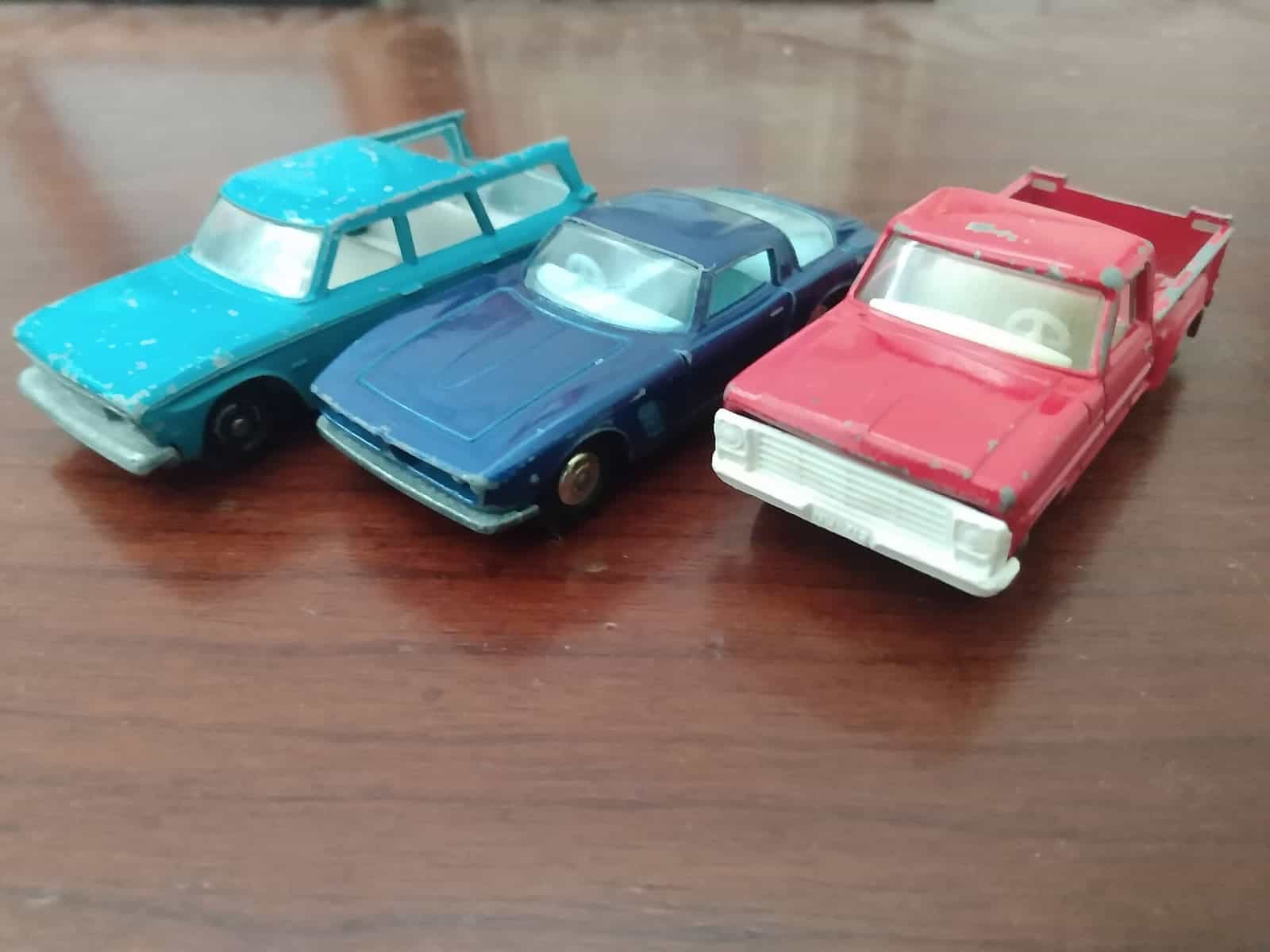
Through the mid-1950s the range kept growing, and the organizing idea that made Matchbox a phenomenon took shape: a numbered series capped at 75 models. The "1-75" range meant that each slot in the lineup was one number, and when a new model arrived it generally took over an existing number rather than extending the list. The effect was clever. A child could, at least in principle, collect the whole set, and the set itself kept refreshing, which gave everyone a reason to come back.
The models were cheap enough for pocket money, small enough to fill a pocket, and sold in simple printed boxes that became almost as recognizable as the toys. Lesney grew from a workshop into one of Britain's best-known manufacturers, and Matchbox became a byword for small die-cast cars in many countries, the United States included. Alongside the 1-75 series, Lesney launched Models of Yesteryear in 1956, a line of older vehicles aimed at a more nostalgic buyer.
When the competition got faster
For roughly a decade and a half, Matchbox set the pace. Then, in 1968, Mattel introduced Hot Wheels, with slick paint and low-friction wheels built to race down track. Matchbox's traditional models, with their more realistic proportions and slower wheels, suddenly looked dated to many children. Lesney answered with its Superfast wheels around the turn of the 1970s, converting much of the range to faster, thinner wheels.
The company survived that fight but not the harder economic years that followed. Lesney went into receivership in 1982, and the Matchbox name passed through other owners before eventually coming under Mattel, the very rival whose cars had once shaken it. The brand continues today, but the Lesney era, when the toys were made in England by the company that invented them, is the chapter collectors treasure most.
What it means for collectors
Lesney's success means that survivors are plentiful, which is exactly what makes the category so approachable. Collectors tend to divide early 1-75 models by their wheels, from the metal and grey plastic wheels of the earliest years to the black plastic wheels that followed and the Superfast wheels of the later period. The base matters too: Lesney-era pieces are marked with the Lesney name and "Made in England," and later bases change as ownership and production moved.
Boxes are a world of their own. The small printed cartons changed design repeatedly over the years, and collectors sort them into recognized styles that help date a model and confirm that a car and box belong together. Condition counts as it does with any toy that was actually played with, and original paint, crisp castings and complete, unrepaired parts are what serious collectors look for. The coronation coach remains a favorite souvenir of the era, a small gilded reminder of the year a London casting shop became a toy company.
More stories