Upside Down in Washington: The Sheet That Made the Inverted Jenny
In May 1918, a young collector bought a sheet of new airmail stamps with the biplane flying upside down. What happened to those 100 stamps became philately's great legend.
By The Grail Hunt · September 11, 2026 · 5 min read
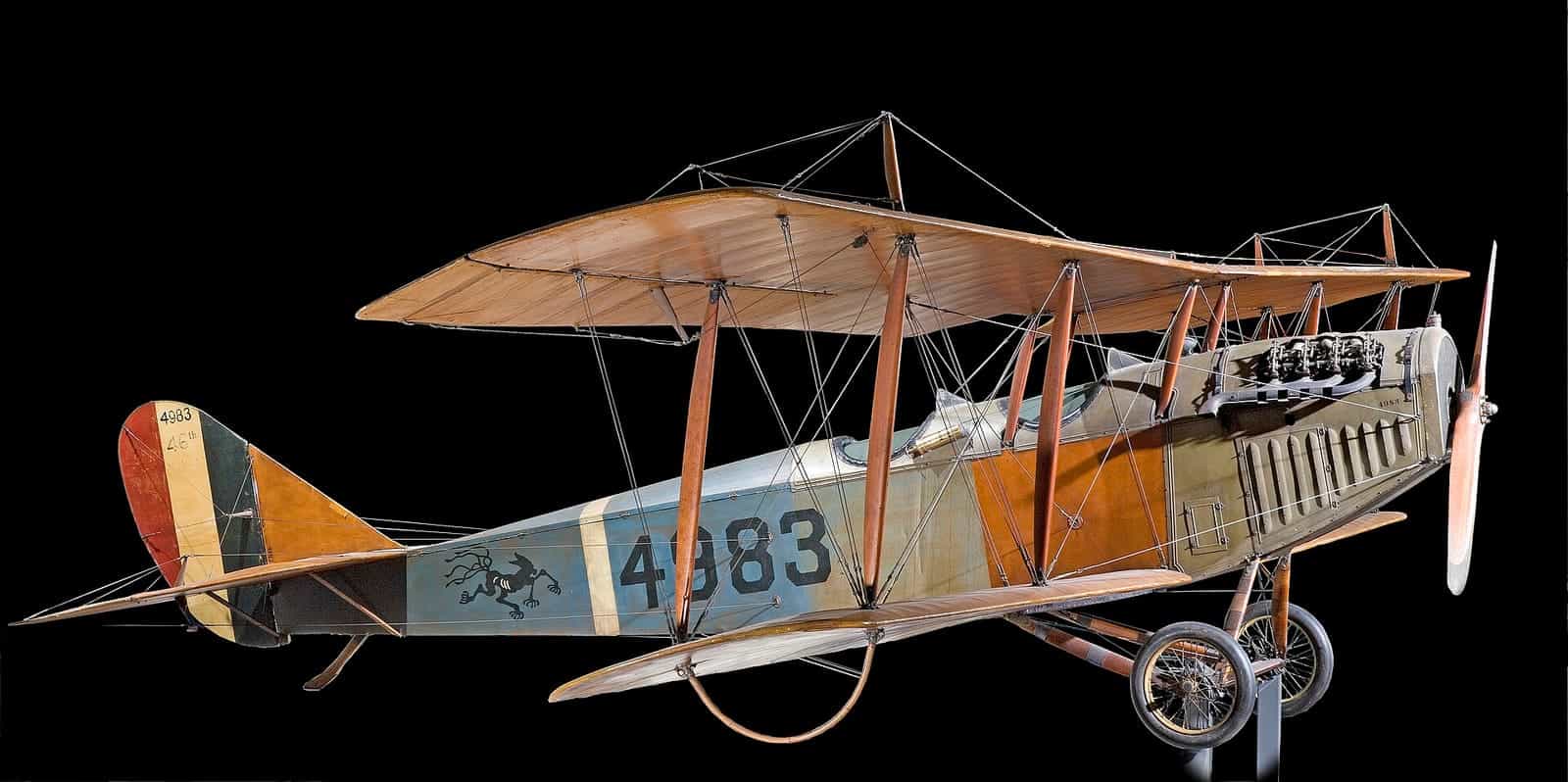
In the spring of 1918, with the United States at war in Europe, the Post Office Department set out to prove that mail could travel by airplane on a regular schedule. The first scheduled airmail route would link Washington, Philadelphia and New York, and flights were set to begin on May 15. To pay for the new service, the department rushed out a new stamp: a 24-cent issue printed in carmine rose and blue, showing a Curtiss JN-4 biplane, the trainer that pilots nicknamed the "Jenny." It went on sale on May 13. Within a day, one sheet of it would become the most famous error in American stamp collecting.
A stamp printed twice
The Jenny was a bicolor stamp, and that is where the trouble began. At the Bureau of Engraving and Printing, a two-color design meant each sheet passed through the press twice, once for the red frame and once for the blue airplane in the center. Every sheet had to be fed back in with the correct orientation for the second pass. If a sheet went in upside down, the frame and the airplane would end up inverted relative to one another.
The schedule made mistakes more likely. The stamps were produced in a hurry to meet the launch of the airmail service, and although accounts suggest printers caught and destroyed some misprinted sheets, at least one slipped through inspection and was sent out to be sold. It was issued in sheets of 100, and one of those sheets, with every airplane flying upside down inside its frame, went to a post office in Washington.
The buyer at the window
William T. Robey was a young office worker in Washington with an interest in stamps. Collectors of the era knew that a brand-new bicolor issue carried the possibility of an error, and Robey went to buy the new airmail stamps hoping, by his own later account, to find something unusual. On May 14, 1918, at the post office on New York Avenue, he was handed a sheet in which the biplane was inverted. He paid face value for all 100 stamps.
A single sheet of 100 misprinted airmail stamps, bought across a post office counter at face value, became the source of every genuine Inverted Jenny known today.
Word of the find spread quickly. Accounts describe postal officials trying to get the sheet back, and Robey keeping it out of their reach while he looked for a buyer. Within days he sold it to Eugene Klein, a Philadelphia stamp dealer. Klein quickly resold it to Colonel Edward H.R. Green, a wealthy collector and the son of the famously frugal financier Hetty Green. Within weeks of leaving the post office, the sheet had changed hands twice, each time at a substantial profit to the seller.
Breaking up the sheet
Green did not keep the sheet whole. With Klein handling the sales, it was divided into single stamps and blocks, and most of the pieces were sold to other collectors. Before the sheet was broken up, each stamp's position on it was marked in pencil on the back, numbered from 1 to 100. Those position numbers turned out to be a gift to future historians. Because every genuine Inverted Jenny came from the same sheet, and because each one's place on it was recorded, individual stamps can be identified and traced through decades of sales and exhibitions. Collectors can also match a stamp to its position by the pattern of its centering and perforations, since the perforations fell unevenly across the sheet and each position has its own characteristic centering.
Green kept some of the best pieces for himself, including the block that carried the plate number from the sheet's margin. After his death in 1936, his vast collection was sold off in a long series of auctions during the 1940s, sending his Jennies back into the market.
Legends and missing stamps
A stamp this celebrated attracts stories, and not all of them hold up. One persistent tale says that a Jenny in Green's possession, or in that of someone close to him, was lost when it was sucked up by a vacuum cleaner. Accounts of the vacuum story differ in their details, and it is best treated as legend rather than documented fact. Other tales about stamps hidden in books or found in old albums circulate regularly and are rarely supported.
The documented history is dramatic enough. In 1955 a block of four Inverted Jennies belonging to collector Ethel McCoy was stolen while on display at a stamp convention in Norfolk, Virginia. The block was broken up, and over the following decades individual stamps from it resurfaced one at a time, identified in part by their position numbers and distinctive features. The case is often cited as proof of how hard it is to sell a famous stamp anonymously when every example is catalogued.
The stamps also became national treasures in a literal sense. Examples are held in the collection of the Smithsonian's National Postal Museum in Washington, not far from the post office where Robey bought the sheet. The Jenny has become one of the best-known images in American philately, and in 2013 the Postal Service issued a new stamp reproducing the famous design as a nod to the original error.
What it means for collectors
Because all genuine Inverted Jennies trace back to one sheet of 100, the supply is fixed, and each surviving stamp has a documented identity. Serious buyers expect a known position, a provenance they can follow through past owners, and a certificate from a respected expertizing body. Condition varies widely from stamp to stamp. Centering, gum, perforations, thins, creases and past repairs all matter, and some examples show damage or alterations from a century of handling.
For most collectors, the realistic connection to the Jenny is not the invert itself but the story around it. The normal 24-cent Jenny, with the airplane right side up, was printed in large numbers and is widely collected, as are covers flown on the early airmail routes of 1918. Collectors of the normal stamp still judge centering and gum carefully, since well-centered examples are much harder to find than off-center ones.
The Jenny's other lesson is caution. Fakes and fantasy items imitating the invert exist, and the design has been reproduced in souvenir form many times. Any stamp offered as an unrecorded Inverted Jenny deserves deep skepticism, because the whole history of this error is the history of a single sheet, and nearly every stamp from it is accounted for.
More stories