Stamp Collecting 101: Perforations, Gum and the Condition Traps
Two stamps that look identical can differ in value a hundredfold. How to read perforations, gum, centering and watermarks before you buy.
By The Grail Hunt · September 3, 2026 · 2 min read
This guide contains eBay affiliate links. If you buy through them we may earn a commission, at no extra cost to you. Read our affiliate disclosure.
Stamp collecting rewards the patient eye. Tiny details — a slightly different perforation, a hidden watermark, an undisturbed layer of gum — can separate a common stamp from a rare one. Here's what to check.
Identify it first
Serious US collectors use Scott catalogue numbers to identify stamps. Sellers who list the Scott number make comparison much easier, and it's the fastest way to look up approximate values and known varieties.
Perforations
The little holes between stamps are measured with a perforation gauge, which counts how many holes fit in two centimeters. Two stamps with the same design can have different perforations — and very different values.
Watch for reperforation: someone adds perfs to a cheaper imperforate or straight-edge stamp to make it look like a scarcer variety. Uneven, oddly spaced or too-clean holes are red flags.
Gum and hinges
For unused stamps, the back matters as much as the front:
- MNH (Mint Never Hinged) — original gum, never mounted. Highest value.
- MH (Mint Hinged) — original gum with a hinge mark from being mounted in an album.
- NG (No Gum) — the gum is missing.
Regumming — applying new gum to fake an MNH stamp — is a known trick. Gum that looks too shiny, too even, or has spread over the perforation tips deserves a closer look.
Centering and faults
How evenly the design sits within the margins affects value enormously, especially for classic 19th- and early-20th-century stamps. Also check for thins (paper loss on the back), creases, short perfs and toning (brown spots).
Watermarks
Some stamps were printed on paper with a hidden watermark. A watermark tray and detector fluid reveal it, and the presence or absence of a watermark can define entirely different catalogue numbers.
Grail Hunt tip: For valuable classic stamps, look for a certificate from a recognized expertizing service such as the Philatelic Foundation or Professional Stamp Experts. Check that the certificate matches the stamp in the photos.
A word on famous rarities
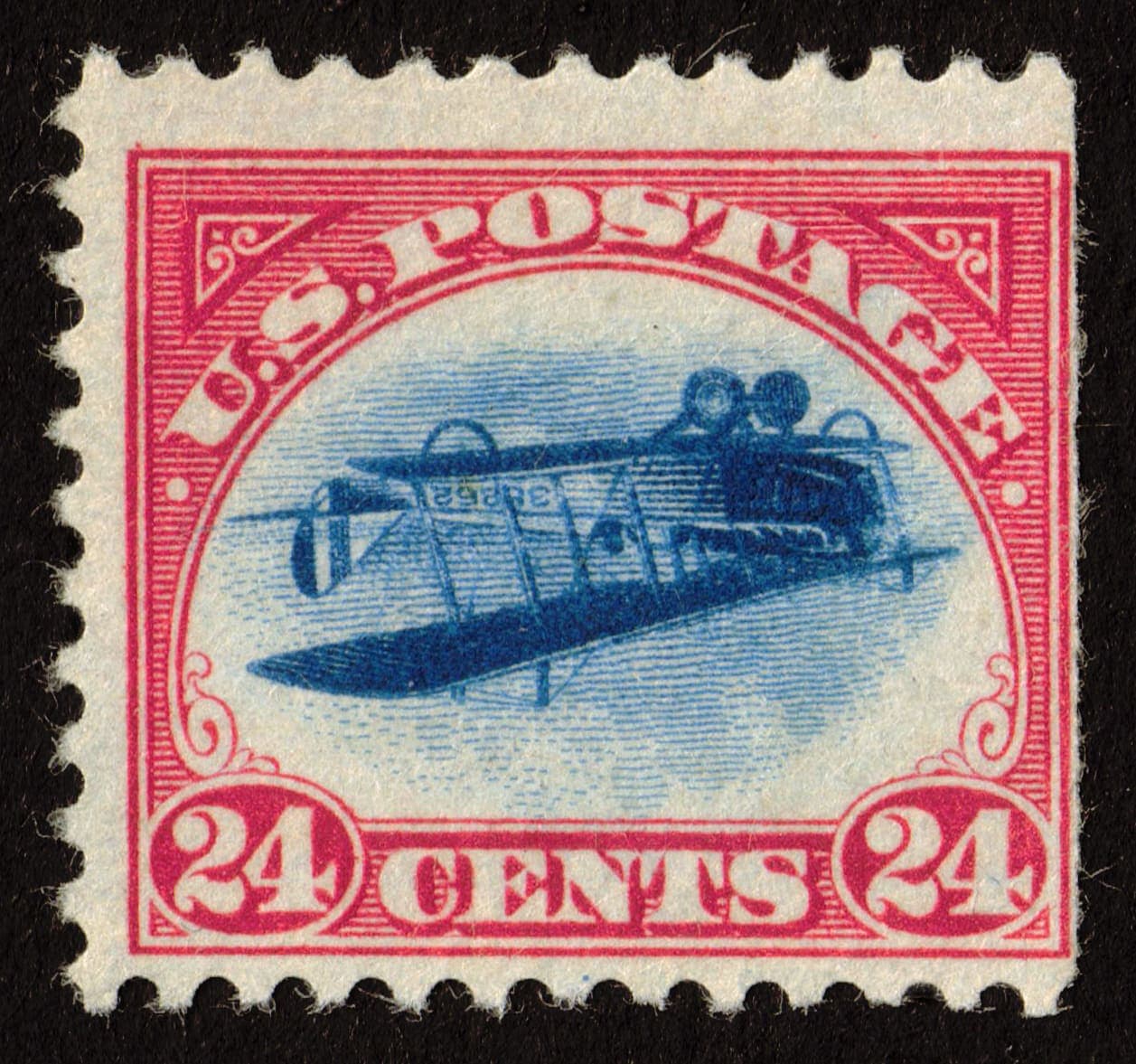
The 1918 "Inverted Jenny," with its upside-down airplane, is the most famous US stamp error — and it's been counterfeited endlessly. If a stamp that famous appears at a bargain price, it isn't a bargain.
The bottom line
Identify by Scott number, check perforations, gum and centering, and demand certificates for the expensive stuff. Condition drives value in stamps more than almost any other hobby.
The story behind it

More Stamps guides