US Stamp Errors and Freaks: Inverts, Imperfs and the Fakes Behind Them
Printing mistakes create some of philately's most exciting stamps — and some of its most common fakes. Learn to tell real errors from clever alterations.
By The Grail Hunt · July 30, 2026 · 3 min read
This guide contains eBay affiliate links. If you buy through them we may earn a commission, at no extra cost to you. Read our affiliate disclosure.
Every collector dreams of finding a printing mistake that slipped past the Post Office. Errors are genuinely exciting — but because they can be worth far more than the normal stamp, they are also a favorite target for fakers. Here's how to understand what you're looking at before you pay a premium.
Errors, freaks and oddities
Collectors group these under the umbrella EFO — errors, freaks and oddities — but the terms mean different things:
- Errors are major, consistent production mistakes: an inverted design, a missing color, missing perforations. The most important ones get their own catalogue listings.
- Freaks are one-off production quirks, like a perforation shift, a paper fold or an ink smear. They're fun and collectible, but usually worth much less than true errors.
- Oddities cover everything else unusual, such as printer's waste or trial colors that escaped the plant.
Knowing which category a stamp falls into sets your expectations. A dramatic-looking freak is not the same as a catalogued error.
The famous types
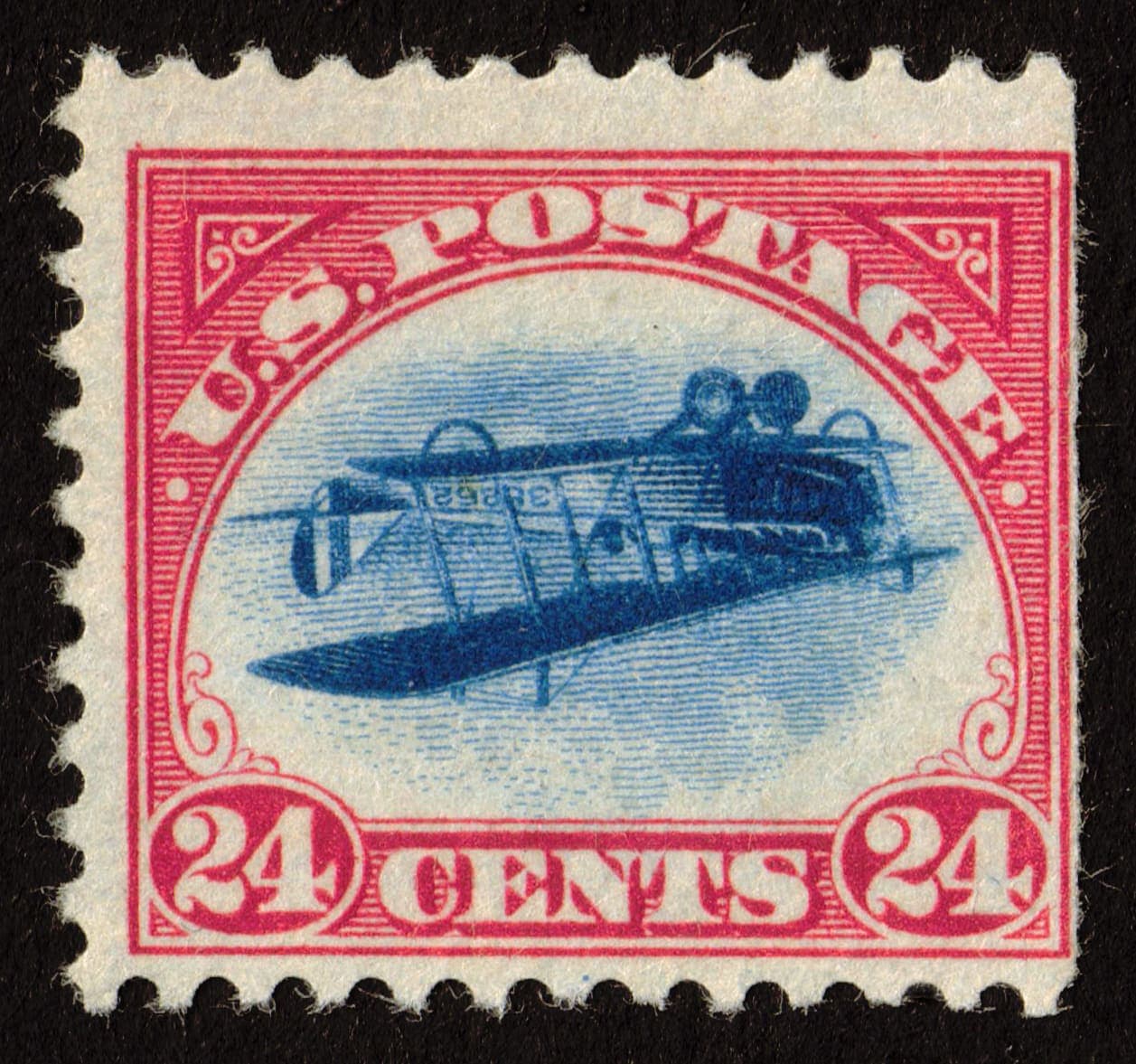
Inverts happen when a sheet is fed through the press the wrong way for one color of a multicolor design. The 1918 Inverted Jenny is the icon, and the 1901 Pan-American inverts are classic rarities too. Modern inverts exist but are rare.
Imperforates are stamps that should have perforations but don't. Look for listings described as "imperf pair" or "imperf between," meaning the perforations are missing between two attached stamps.
Color-missing errors occur when one ink in a multicolor stamp fails to print entirely — not just printed lightly, but completely absent.
Perforation shifts are the most common thing you'll see labeled "error" online. When the perforations cut through the design, it's a freak, and value depends on how dramatic and eye-catching the shift is.
How fakes are made
This is where you need to be skeptical:
- Trimmed perfs. Cutting the perforations off a normal stamp creates a fake imperforate. That's why genuine imperforate errors are usually collected in pairs or larger blocks — a single "imperf" stamp is very hard to prove.
- Chemical or light fading. Certain inks can be removed with chemicals or faded by prolonged sunlight, creating a fake color-missing error. A genuine missing color leaves no ghost or trace; a faded color often does.
- Printed or painted fakes. Famous inverts have been forged repeatedly, from crude copies to skillful ones.
- Misleading descriptions. Some sellers call ordinary color shifts, light inking or minor perf wobbles "errors" to attract bids.
Grail Hunt tip: For any major error, insist on a certificate from a recognized expertizing service such as the Philatelic Foundation, Professional Stamp Experts or the American Philatelic Society's expertizing service. Then compare the certificate photo to the listing photos, stamp for stamp.
What drives value
Several factors determine where an error sits on the value scale:
- Catalogue status — a listed error with its own number carries more weight than an unlisted variety.
- Known quantity — errors found in a single sheet are scarcer than those from a widely distributed print run.
- Format — pairs, blocks and positional pieces often matter more than singles.
- Condition — gum, centering and faults count just as much as they do for normal stamps.
- Documentation — certificates and a clear provenance add confidence.
Buying errors online
Treat every EFO listing as a claim you need to verify:
- Ask for high-resolution scans of front and back, ideally next to a normal example of the same stamp.
- For imperfs, ask whether it's a single, pair or block, and whether the item has been certified.
- For color-missing errors, ask the seller how they ruled out fading or chemical removal.
- Ask about return policies specifically for items that fail certification.
- Pay through methods with buyer protection, and read the seller's feedback for stamp-specific sales.
The bottom line
Genuine stamp errors are among the most rewarding finds in philately, but the premium they carry makes them a magnet for alterations. Learn the difference between errors and freaks, favor pairs and blocks for imperforates, and let an expertizing certificate do the heavy lifting on anything expensive.
The story behind it

More Stamps guides