How to Spot a Fake Morgan Silver Dollar Before You Bid
Counterfeit Morgans flood online marketplaces. Weight, diameter, mint marks and a few quick checks will weed out most of them.
By The Grail Hunt · September 20, 2026 · 6 min read
This guide contains eBay affiliate links. If you buy through them we may earn a commission, at no extra cost to you. Read our affiliate disclosure.
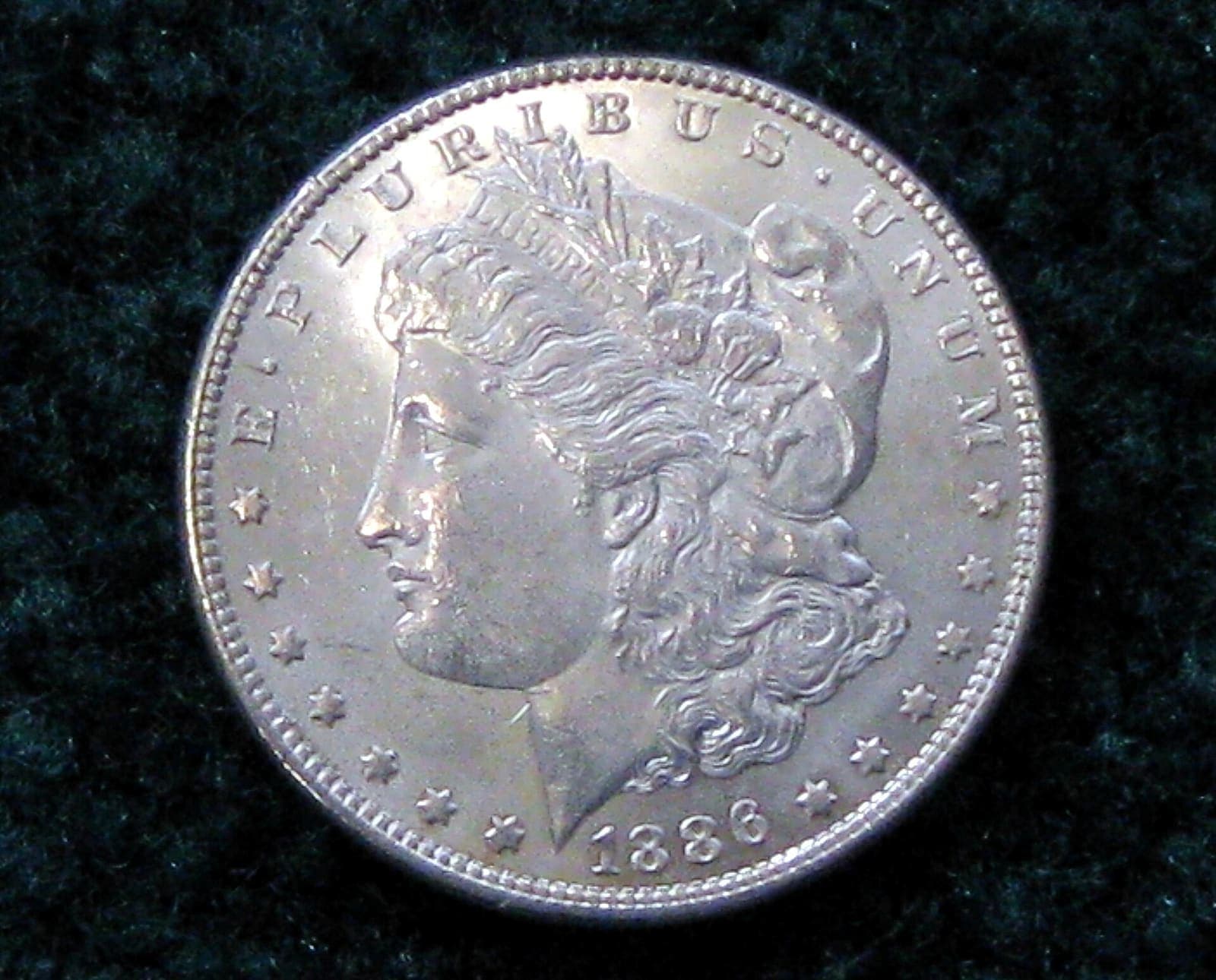
The Morgan dollar is one of the most collected coins in America — and one of the most counterfeited. Minted from 1878 to 1904 and again in 1921, it's big, beautiful and made of 90% silver, which makes it a magnet for fakes. The good news: most counterfeits fail a handful of simple checks.
1. Know the specs by heart
A genuine Morgan dollar has very specific physical properties:
- Weight: 26.73 grams
- Diameter: 38.1 mm
- Composition: 90% silver, 10% copper
A cheap digital scale and a pair of calipers will catch the majority of fakes. Base-metal counterfeits are often noticeably light or slightly off in size. If a seller won't state the weight, ask — and treat silence as an answer.
Worn coins lose a little metal, so a heavily circulated genuine Morgan can weigh slightly under spec. Expect a shortfall of a few tenths of a gram at most. A coin that's a full gram or more off deserves a hard look.
2. Check the date against the mint mark
Mint marks sit on the reverse, just below the wreath and above the "DO" in DOLLAR. Genuine Morgans were struck at Philadelphia (no mark), New Orleans (O), San Francisco (S), Carson City (CC) and — only in 1921 — Denver (D).
That gives you an instant red flag: any Morgan dated before 1921 with a D mint mark is fake. Counterfeiters also love "impossible" dates that were never struck at all. Before you bid on a rarity, confirm the date-and-mint combination actually exists. A few easy rules:
- Carson City struck Morgans only from 1878 to 1885 and 1889 to 1893. A CC coin dated outside those years is a fantasy piece.
- No classic Morgans exist dated 1905 through 1920, or after 1921. (The US Mint has issued modern Morgan dollars since 2021, but those are clearly modern coins with their own specs and packaging.)
- 1895 Philadelphia Morgans are known only as proofs. A worn "1895" with no mint mark, offered cheaply, should be assumed fake until a grading service says otherwise.
3. Know the dates counterfeiters target
The more a date is worth, the more likely it's been faked. The usual suspects include:
- 1893-S — Only 100,000 struck, and the king of the series in circulated grades.
- 1889-CC — The key Carson City date.
- 1895 — The proof-only "King of Morgans".
- Carson City dollars in general — The CC mint mark adds a premium even to common dates, so it gets added to Philadelphia coins.
Fakes of these come in two main forms. Die-struck counterfeits are made from scratch, sometimes in silver, so weight and the magnet test may not catch them. Altered genuine coins start as a real, cheaper Morgan: a mint mark is added or removed, or a digit is reshaped. Altered coins pass every metal test because the metal is real.
For altered mint marks, examine the area around the letter under magnification. A genuine mint mark rises out of the field cleanly. An added one may show a seam, glue, a slight tilt, or a letter shape that doesn't match the style used that year. Genuine 1893-S dollars also have a well-documented die line through the T in LIBERTY, which is one of the first things specialists check.
4. Look hard at the details
Genuine Morgans have crisp, well-defined lettering and denticles (the tooth-like beads around the rim). Common tells on fakes include:
- Mushy or "soapy" hair and eagle feathers
- Pimples, pits or a grainy surface across the fields
- Letters that look thick, blobby or uneven
- A seam or ridge along the edge — genuine Morgans have a reeded edge with even, consistent reeding
Also check luster. An uncirculated Morgan has a rolling "cartwheel" sheen that moves as you tilt the coin. Many fakes look flat and dull, or shiny like chrome. Video, where a seller tilts the coin under a light, tells you more than any still photo.
Grail Hunt tip: Ask for clear, well-lit photos of both sides and the edge. A seller who only shows stock images or blurry shots is giving you a reason to walk away.
5. Use the magnet and ring tests (as a first pass)
Silver isn't magnetic. If a magnet grabs the coin, it's not a genuine Morgan. A real silver dollar also gives a long, clear ring when balanced on a fingertip and tapped gently with another coin. Neither test is proof on its own — skilled fakes can pass both — but failing either one is decisive.
Skip anything more aggressive. Acid tests, filing the edge or scratching the surface will damage a genuine coin and destroy its collector value.
6. Grading, prooflikes and condition traps
A genuine coin can still be a bad buy. Morgans are graded on the 1–70 scale, and small differences in grade can mean big differences in price for better dates. Watch for:
- Cleaned coins — Fine hairlines and an unnatural brightness. These sell well below problem-free examples.
- Sliders — Lightly circulated coins sold as uncirculated. Check the high points of Liberty's cheek and hair above the ear for a different texture or color.
- Prooflike claims — PL and DMPL (deep mirror prooflike) Morgans have mirror-like fields and carry real premiums. Only a grading service's designation counts, not a seller's description.
- VAM varieties — Die varieties catalogued by collectors. A few carry big premiums, but most add little. Confirm any VAM claim with an attribution on the holder.
7. Price it right
For common dates, the price floor is the silver content of about 0.77 troy ounces. Our guide to bullion versus numismatic coins explains when you're paying for silver and when you're paying for collector demand. For better dates, check what the same date, mint and grade has actually sold for — see how to price check with sold listings.
8. For key dates, buy it certified
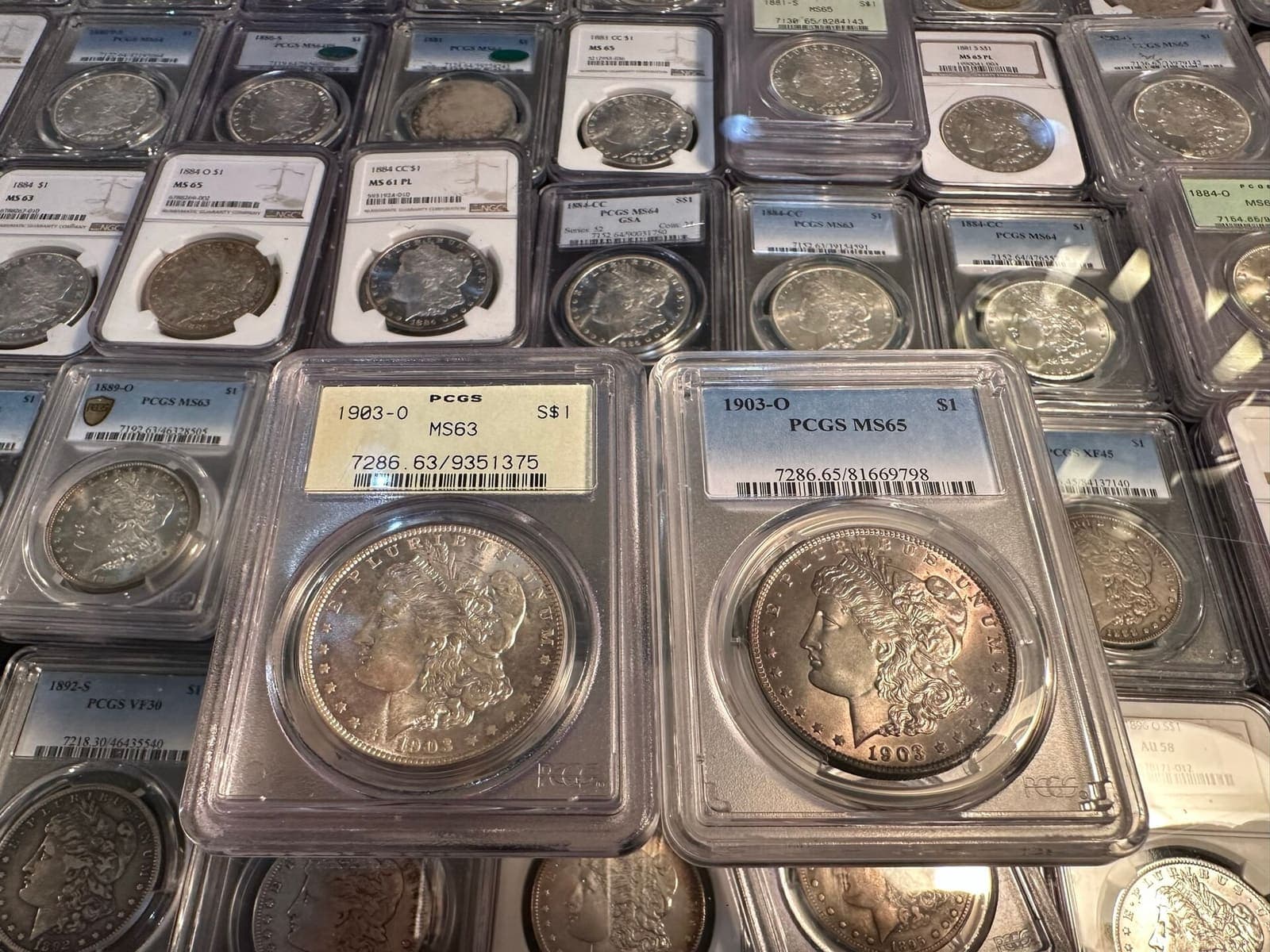
For key dates like the 1893-S or the 1889-CC, the smartest move is to buy coins already graded and encapsulated by a major service such as PCGS or NGC. Always verify the certification number on the grader's website — counterfeit slabs exist too.
When you verify, compare the photos on the grader's site (where available) with the coin in the listing. A real cert number attached to a different coin is a known scam.
Questions to ask a seller
- What does the coin weigh, and what is its diameter?
- Can you send photos of both sides and the edge, plus a short tilt video?
- Has the coin been cleaned or dipped?
- Is it returnable if a grading service calls it not genuine?
Red flags in listings
- Key dates priced far below recent sold prices
- Multiple copies of the same rare date from one seller
- Shipping from overseas with vague or no description
- Fantasy dates, or a CC or D mint mark on a year that doesn't exist
- The word "copy" stamped on the coin (required on replicas) or hidden in the listing text
Quick buyer's checklist
- Weight and diameter within spec
- Date and mint mark combination actually exists
- Clean, sharp lettering and even edge reeding
- Natural luster, with no sign of cleaning
- Not magnetic
- Certified and cert-verified for key dates
- Buyer protection and a clear return policy
The bottom line
Most fakes are caught by weight, size and a date/mint-mark sanity check. Add careful photo review and seller feedback, and you'll avoid the overwhelming majority of bad buys. Save the big-money hunts for certified coins from sellers with a long track record.
More US Coins guides