Three Little Letters: The 1909 V.D.B. Cent and the Uproar Over Initials
The first Lincoln cent carried its designer's initials for only a few days before a public outcry erased them, and a small San Francisco run became a legend.
By The Grail Hunt · August 22, 2026 · 5 min read
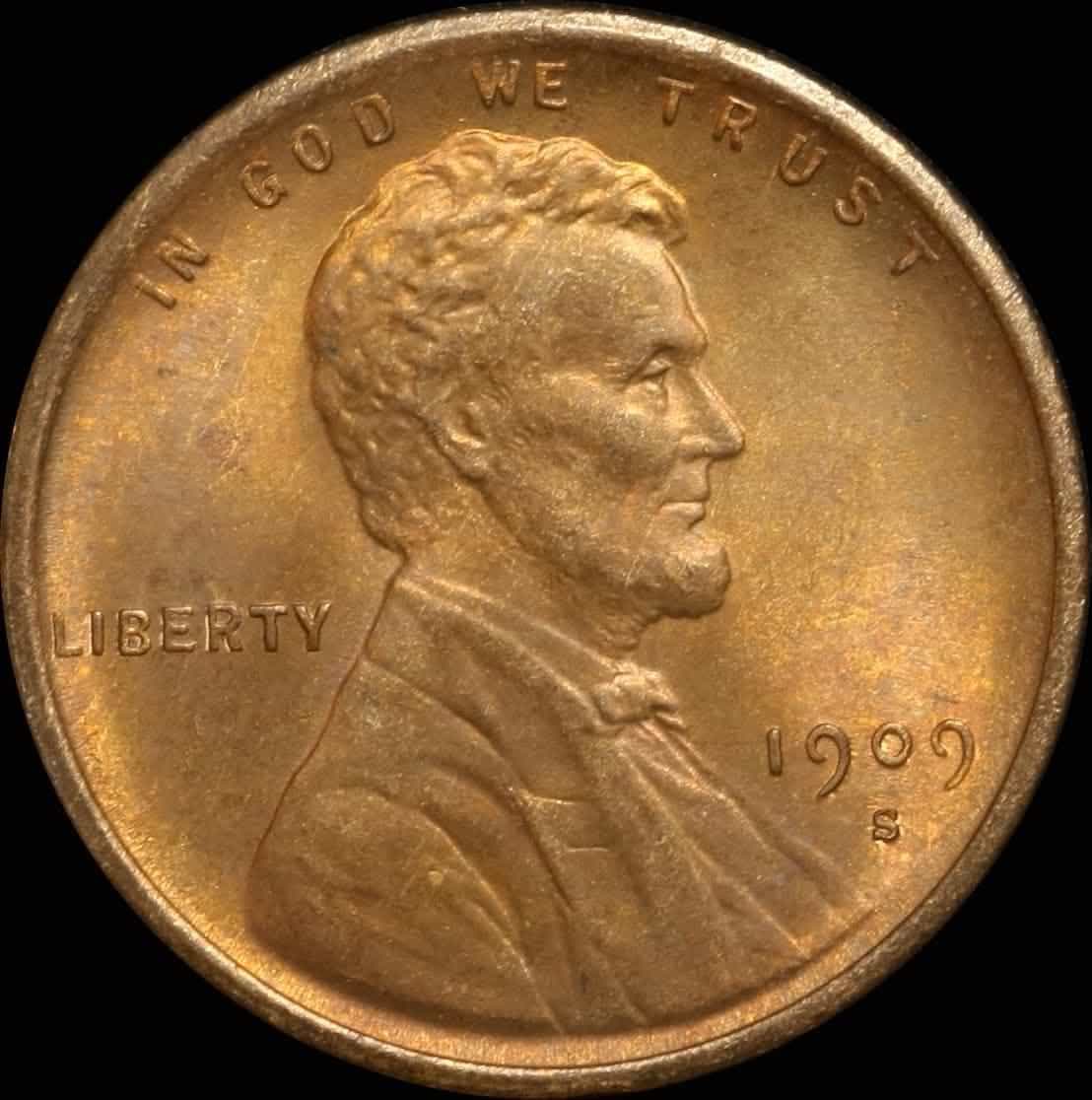
In August 1909, Americans lined up to get their hands on a new kind of penny. For the first time, a regular-issue United States coin in everyday circulation carried the portrait of a real, identifiable American. The new cent, issued in the year marking the hundredth anniversary of Abraham Lincoln's birth, replaced the Indian Head design that had been in use for half a century. It went into circulation on August 2, 1909. Within days, the coin was at the center of an argument, not about Lincoln, but about three small letters at the bottom of the reverse.
A sculptor's Lincoln
The coin was the work of Victor David Brenner, an immigrant from the Russian Empire, born in what is now Lithuania, who had trained as a die cutter and engraver before becoming a respected medalist and sculptor in New York. Brenner had come to the attention of President Theodore Roosevelt, who was eager to improve the artistry of American coinage and had already pushed for redesigns of the nation's gold coins. Brenner had produced a portrait of Roosevelt for a medal, and the connection helped bring him the commission for the new cent.
Brenner's Lincoln is a bust in profile, facing right, bearded and serious, based on his earlier work depicting the president. On the reverse he placed two stylized ears of wheat framing the words ONE CENT and UNITED STATES OF AMERICA. The design was simple, dignified and practical for a coin that would be struck in huge numbers, and in its basic form it would last far longer than anyone at the time could have predicted. Lincoln's portrait remains on the cent to this day, and the wheat reverse was used until 1958.
The initials that caused a stir
At the bottom of the reverse, between the wheat stalks and beneath the rim, Brenner placed his initials: V.D.B. Designers' initials on coins were nothing new. What made these different, in the eyes of critics, was their prominence. They were spelled out in full, readable at a glance, on a coin that every American would handle.
Complaints came quickly. The objection, as it was generally put in the press and among officials, was that the initials were too conspicuous, and some likened them to a form of advertising for the designer on the nation's money. Accounts differ on how much of the outcry came from the general public and how much from newspapers, officials and figures within the Mint, but the result was swift. Treasury Secretary Franklin MacVeagh ordered the initials removed, and production of the coin with V.D.B. ended within days of its release.
The episode is often told as a simple story of vanity rebuked, but it was more complicated than that. Other designers' initials already appeared on circulating coins, including the small "B" of Mint Chief Engraver Charles Barber on coins of his design. Some historians of the period point out that removing Brenner's initials entirely, instead of reducing them, was a choice rather than a necessity, and that tensions between outside artists and the Mint's own engravers may have played a part. What is certain is that the V.D.B. came off, and the reverse was struck without any initials at all.
San Francisco's short run
The change produced one of the most famous rarities in American coinage. Lincoln cents were struck at the Philadelphia Mint, which used no mintmark on cents at the time, and at the San Francisco Mint, whose coins carried a small "S" below the date. Philadelphia had already struck tens of millions of the V.D.B. cents before the initials were removed, enough that the 1909 V.D.B. from Philadelphia is common and widely saved.
San Francisco was a different matter. When production of the V.D.B. version stopped, the western mint had struck only 484,000 of them. That figure, small by the standards of a circulating cent, made the 1909-S V.D.B. the scarcest regular-issue coin in the early Lincoln series.
Because production stopped within days, the San Francisco Mint struck fewer than half a million of the original V.D.B. cents, turning a routine coin into the series' most famous key date.
Scarcity alone does not make a legend. What made the 1909-S V.D.B. special was the rise of a new generation of coin collectors in the twentieth century who set out to fill every hole in a Lincoln cent album, date by date and mint by mint. Inexpensive folders and albums made the Lincoln series one of the most popular entry points into the hobby, and for many collectors the 1909-S V.D.B. was the space that stayed empty the longest. Its reputation grew with every album that was sold.
The initials come home
Brenner did not live to see the whole story play out, but he did see a partial vindication. In 1918, the Mint restored his initials to the cent, this time in a far less conspicuous place: tiny letters on the truncation of Lincoln's shoulder on the obverse, where they are easy to miss without magnification. Brenner died in 1924. His initials have remained on the shoulder of Lincoln ever since, through the change to the Lincoln Memorial reverse in 1959 and the designs that followed.
The irony is hard to miss. The initials that were removed for being too visible ended up permanently on the coin, and the brief period when they appeared in full created the most celebrated date in the entire series.
What it means for collectors
The 1909-S V.D.B. remains the headline coin of the Lincoln cent series, and it is also one of the most frequently faked. The classic fake is a common Philadelphia V.D.B. cent with an "S" mintmark added, and cast and die-struck counterfeits exist as well. Collectors look closely at the shape and placement of the mintmark and at the style of the V.D.B. letters, and many prefer examples authenticated and graded by a recognized third-party service.
Condition matters just as much. Surviving examples range from well worn to uncirculated, and collectors judge them on the familiar Sheldon grading scale, paying attention to the high points of Lincoln's cheek and jaw and to the wheat lines on the reverse. Color is also important for copper, which changes from original red toward brown over time, and cleaning or artificial toning can significantly affect how a coin is judged.
For collectors on a smaller budget, the 1909 V.D.B. from Philadelphia offers the same story in a far more common coin, and the 1909-S without initials is a respected semi-key date of its own. Together, these coins tell the story of a few days in August 1909, when three letters on a penny became one of the best-remembered controversies in American numismatics.
More stories