Buying British Gold Sovereigns: Monarchs, Mints and Fakes to Avoid
The gold sovereign is the world's most famous bullion coin with a collector side. Learn the monarchs, branch mints, key specs and how to spot counterfeits online.
By The Grail Hunt · August 5, 2026 · 3 min read
This guide contains eBay affiliate links. If you buy through them we may earn a commission, at no extra cost to you. Read our affiliate disclosure.
For more than two centuries, the British gold sovereign has been a coin you can hold in the palm of your hand and trust almost anywhere. The modern sovereign was introduced in 1817, and it's still struck today. That long history means you can buy one simply for its gold, or dive into a deep collecting field full of monarchs, mints and scarce dates. Either way, a few basics will keep you safe.
1. Know the specs
A standard modern sovereign has consistent, well-documented specifications:
- Composition: 22-carat gold (about 91.67% gold, with the balance mostly copper)
- Weight: about 7.98 grams
- Diameter: about 22.05 mm
- Fine gold content: roughly 0.2354 troy ounces
The half sovereign is exactly half the gold, and larger multiples such as the two-pound and five-pound coins have also been issued. A precise scale reading to at least 0.01 g and a set of calipers are the first tools you should reach for with any sovereign.
2. Monarchs and designs
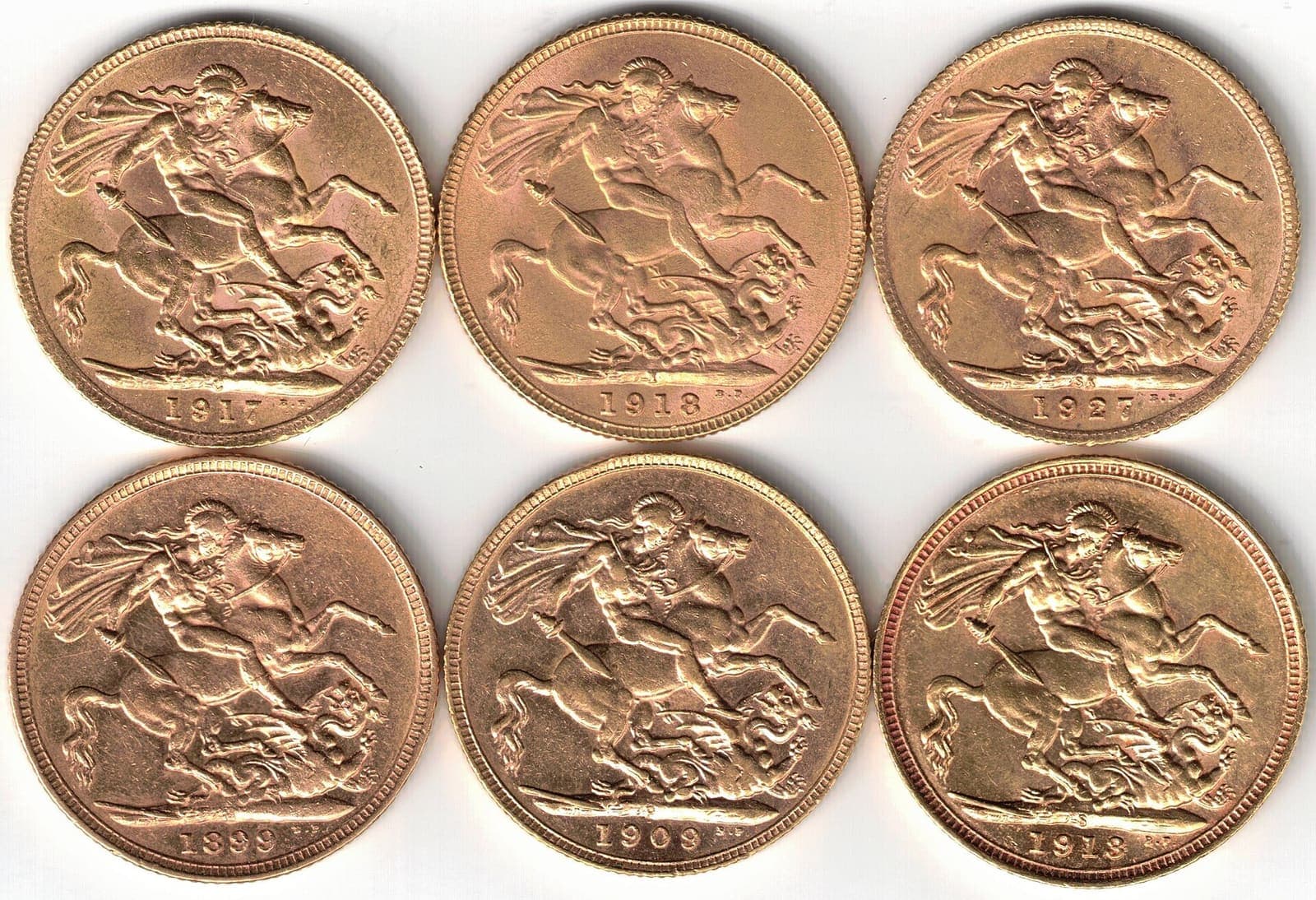
Sovereigns carry the portrait of the reigning monarch on the obverse. Across the modern series you'll find George III, George IV, William IV, Victoria, Edward VII, George V, George VI, Elizabeth II and Charles III. Victoria's long reign alone produced several portraits, from the youthful "young head" to the later jubilee and old head designs.
The most famous reverse is Benedetto Pistrucci's St George slaying the dragon, used on most sovereigns since the Victorian era. Some earlier and Victorian coins instead carry a shield reverse, and special designs have appeared for anniversaries and coronations.
3. Branch mints and mint marks
While London struck most sovereigns, the British Empire also operated branch mints that made them. A small letter mint mark identifies them, and its position varies by type and period:
- S — Sydney
- M — Melbourne
- P — Perth
- C — Ottawa, Canada
- I — Bombay, India
- SA — Pretoria, South Africa
Coins without a mint mark are generally from London. Branch-mint coins add a whole extra layer to collecting, and certain date and mint combinations are genuinely scarce.
4. Bullion coin or collector coin?
Most sovereigns trade close to their gold value plus a modest premium. These are common dates in circulated or ordinary mint-state condition, and they're popular with buyers who want gold in small, recognizable units.
A sovereign becomes a collector coin when something beyond gold drives demand: a scarce date or mint, a high grade, an unusual variety, or a proof strike made specifically for collectors. Those factors can push value well beyond the metal. If you're paying a collector premium, you want certification and a sharp eye for condition.
Grail Hunt tip: Decide before you shop whether you want gold or a collectible. Bullion buyers should hunt for the lowest premium per gram; collectors should focus on date, mint, grade and originality.
5. How sovereign fakes work
Because sovereigns are so widely traded, they've been counterfeited for a very long time. Two kinds of fakes cause the most trouble:
- Base-metal or gold-plated fakes — These usually fail a weight or size check, and a gold-plated fake may show wear that reveals a different metal underneath.
- Gold fakes with the right metal — Some counterfeits were struck in real gold of roughly the correct fineness, sometimes with dates that were never issued or with wrong design details. These can pass weight tests, which is why details matter.
Look closely at the lettering, the dragon, St George's horse and the edge reeding. Genuine coins have crisp, even detail and sharp, consistent reeding. Mushy detail, a grainy surface, odd colors or a date and mint combination that doesn't exist are all red flags.
6. Buying sovereigns online
- Ask for the weight to two decimal places and a photo of the coin on the scale
- Request clear, well-lit photos of both sides and the edge
- Confirm the date, monarch and mint mark combination against a reliable reference
- For scarce dates or high grades, buy certified by PCGS or NGC and verify the certification number
- Check seller feedback on gold sales and pay through the marketplace for buyer protection
The bottom line
Sovereigns are a rare blend of bullion and history. Know the specs, recognize the monarchs and mint marks, and never rely on weight alone — some fakes are real gold. Buy common dates from reputable bullion sellers, and buy anything with a collector premium certified.
More World Coins guides