Reading Antique Silver Marks: British Hallmarks, Coin Silver and Plate
Lion passant, town marks, date letters, coin silver and EPNS — how to read the stamps on antique silver and tell solid silver from silverplate before you buy.
By The Grail Hunt · July 2, 2026 · 3 min read
This guide contains eBay affiliate links. If you buy through them we may earn a commission, at no extra cost to you. Read our affiliate disclosure.
Antique silver is covered in tiny clues. The marks on a spoon, teapot or candlestick can tell you what it's made of, where it was made, who made it and even roughly when. They can also reveal that a "silver" piece is really plated. Here's how to read the most common marks.
The British hallmark system
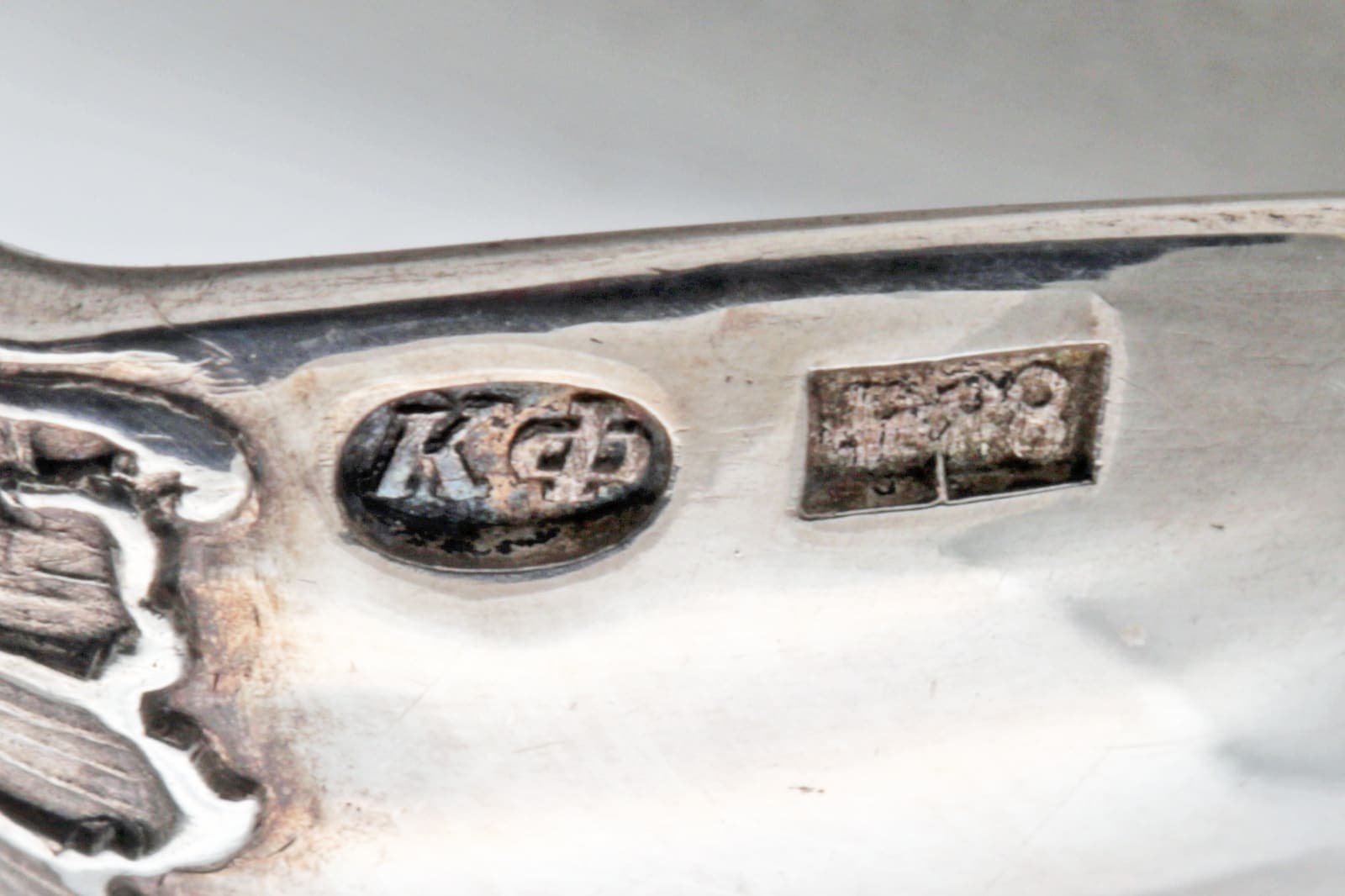
Britain has one of the oldest and most organized hallmarking systems in the world. A typical set of British marks includes several separate stamps:
- Standard mark — shows the silver purity. For sterling (92.5% silver) made in England, this is traditionally the lion passant, a walking lion.
- Town mark — shows which assay office tested the piece.
- Date letter — a letter that changes each year.
- Maker's mark — usually the initials of the maker or sponsor.
Some older pieces also carry a duty mark showing the monarch's head, used for roughly a century from the late 18th century to show that tax had been paid.
Town marks
Each assay office has its own symbol. Some well-known examples:
- London — a leopard's head
- Birmingham — an anchor
- Sheffield — traditionally a crown
- Edinburgh — a castle
Scottish and Irish pieces use their own standard marks, rather than the English lion passant. Other historic offices existed too, and some closed long ago, which can help narrow down a piece's age.
Date letters
The date letter is where British silver gets especially useful. Each assay office used a letter for each year, cycling through the alphabet. The font style, letter case and shield shape changed with each cycle, so the same letter can mean very different years. To date a piece, you'll need a published hallmark chart for the right assay office. Compare the letter and the shape of its surrounding shield carefully.
American coin silver vs. sterling
American silver works differently. There was no national hallmarking system, so marks are less standardized:
- Coin silver — much early American silver was made to a standard of about 90% silver, similar to coinage. Pieces may be marked "COIN," "PURE COIN," "STANDARD" or simply with the maker's name.
- Sterling — American makers largely moved to the sterling standard during the second half of the 19th century, marking pieces "STERLING" or "925."
Some American and other makers also used pseudo-hallmarks — symbols that look British but aren't official hallmarks. Don't assume a lion-like mark means British sterling.
Silverplate marks
Silverplate is base metal with a thin coating of silver. It's common, and useful, but worth far less than solid silver. Marks that usually signal plate include:
- EPNS — electroplated nickel silver
- EPBM — electroplated Britannia metal
- "Silverplate," "Triple Plate," "Quadruple Plate" or "A1"
- "Nickel silver" or "German silver" — alloys that contain no silver at all
Earlier Sheffield plate was made by fusing silver to copper, before electroplating took over in the 19th century. It has its own collector appeal; copper showing through on high points is a typical sign.
Grail Hunt tip: Ask the seller for sharp close-ups of every mark on the piece, not just one. Real hallmarks come in a set, and a single blurry stamp can hide a great deal.
Verify before you buy
Marks can be worn, misread or faked, and transposed hallmarks — marks cut from one piece and set into another — exist on some high-value items. Look for:
- Marks that are crisp and consistent with the style of the era
- Solder lines around a set of marks, which can indicate tampering
- Silver that shows no base metal at worn edges
If in doubt, a jeweler or silver specialist can test the metal.
The bottom line
Learn the four core British marks, keep a hallmark chart handy for date letters, understand coin silver and sterling, and recognize the words that mean plate. Read every stamp, ask for clear photos, and you'll know exactly what you're buying.
More Antiques guides