Buying Antique Clocks: Movements, Marriages and What to Check First
Mantel, wall and tall-case clocks reward careful buyers. How to judge the movement, spot replaced parts and marriages, and ship a clock safely.
By The Grail Hunt · June 30, 2026 · 3 min read
This guide contains eBay affiliate links. If you buy through them we may earn a commission, at no extra cost to you. Read our affiliate disclosure.
An antique clock is a piece of furniture, a machine and a bit of history all at once. That's what makes them so appealing — and why they need a closer look than most antiques. A handsome case can hide a tired movement, a replaced dial or parts that were never meant to be together. Here's how to buy with confidence.
Know the main types
Most clocks you'll see for sale fall into three broad families:
- Mantel and shelf clocks — compact, usually spring-driven, made in huge numbers in the 19th and early 20th centuries. Black "marble" and adamantine cases, kitchen clocks and French carriage-style pieces all live here.
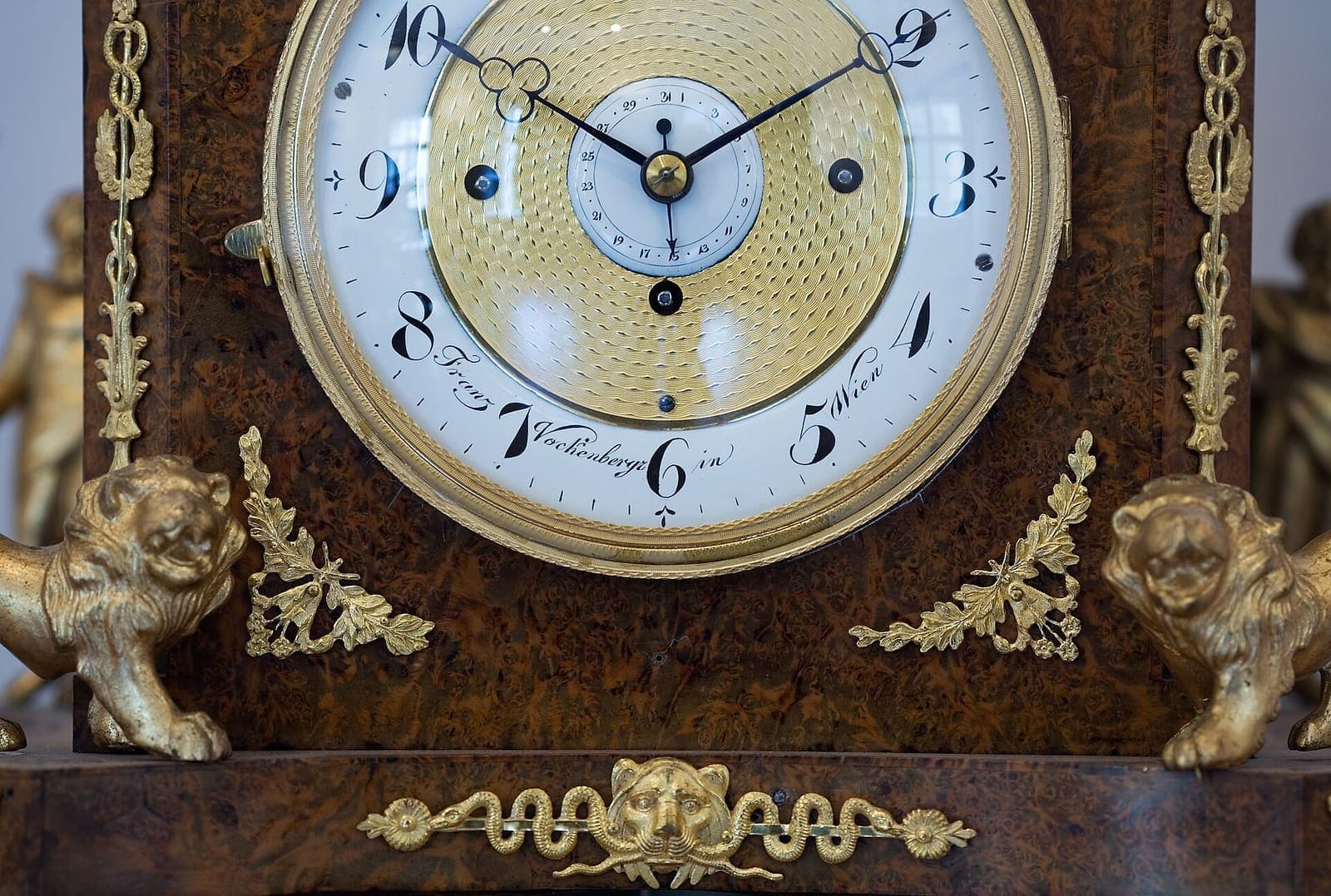
- Wall clocks — from simple schoolhouse clocks to elegant regulators, including the long-cased Vienna style with its visible pendulum and weights.
- Tall-case clocks — better known as grandfather clocks. These are usually weight-driven and are the most complex to buy, move and set up.
Knowing the family helps you ask the right questions and compare the clock to genuine examples.
Understand the movement
The movement is the clock's engine, and it drives most of the value. A few basics:
- Weight-driven vs. spring-driven. Weights hang on cables or chains; springs are wound with a key.
- Running time. Many movements are 8-day (wound weekly) or 30-hour (wound daily). The number of winding holes on the dial hints at what it does — typically one for time only, two for time and strike, three for time, strike and chime.
- Materials. Most antique movements are brass. Some early American shelf clocks used wooden works, which are collectible in their own right.
Ask whether the clock runs, strikes and chimes correctly, and for how long it has run since it was last wound. "It ran when I got it" isn't the same as "it runs now."
Watch for replaced parts
Some replacements are acceptable; others hurt value. Look for:
- Hands that don't match the style or period of the dial
- Dials that have been repainted or replaced — look for crisp, too-perfect numerals on an otherwise worn clock
- Pendulums and weights that are generic modern replacements
- Quartz conversions, where the mechanical movement has been removed entirely — a major loss for collectors
A well-documented repair by a competent clockmaker is fine. Unexplained substitutions are a reason to negotiate or walk away.
Beware of "marriages"
A marriage is a clock assembled from parts of different clocks — most often a tall-case movement and dial fitted into a case they didn't start life in. Clues include:
- Extra or plugged screw holes on the seatboard or case
- A dial that doesn't sit neatly in the hood opening, or shows gaps around the edge
- Winding holes that don't line up with openings, or a pendulum that swings too close to the case
- Wood, finish or style that doesn't match between hood and trunk
Marriages aren't worthless, but they're worth much less than an original, all-together clock, and they should be priced that way.
Servicing, shipping and setup
Budget for servicing. A clock that hasn't been professionally cleaned in years is running on old, gummy oil and wearing its own pivots. Oiling alone isn't a service — a proper overhaul involves disassembly and cleaning, and it can cost a real fraction of the purchase price, so factor it in.
For shipping, ask the seller to remove and pack the pendulum and weights separately, secure chime rods or gongs, and immobilize the movement. Tall-case clocks and fragile glass doors call for professional packing or a crate. Once it arrives, the clock must be level and "in beat" — the tick and tock evenly spaced — before it will run reliably.
Grail Hunt tip: Ask for a short video of the clock running and striking, plus photos of the movement from the back, the inside of the case and any maker's marks or labels. Sellers of honest clocks rarely hesitate.
Buying safely online
Ask about service history, missing keys and replaced parts. Pay with buyer protection, read return terms carefully and insist on insured shipping.
The bottom line
Judge the movement first, then look for replaced parts and signs of a marriage. Factor servicing and careful shipping into your budget, and ask for video. Do that, and you'll bring home a clock that keeps ticking for another century.
More Antiques guides