Vintage Watch Hunting: 7 Checks Before You Hit “Buy It Now”
Redials, frankenwatches and tired movements are everywhere. A seven-point checklist for buying vintage mechanical watches online.
By The Grail Hunt · September 15, 2026 · 6 min read
This guide contains eBay affiliate links. If you buy through them we may earn a commission, at no extra cost to you. Read our affiliate disclosure.
Vintage watches are one of the most rewarding things to collect — and one of the easiest to get wrong. A 1960s Omega or Seiko can be a bargain or a money pit, and the listing photos rarely tell you which. Run through these seven checks before you commit.
Start with a model you can research
The checks below work for any vintage mechanical watch, but they're easiest on a model with plenty of documented examples. The 1960s Omega Seamaster automatic is a classic starting point: made in large numbers, well documented, and available in many dial and case variations. The price box above is for a steel example. Most use Omega's well-regarded automatic calibers — the 550 and 552 without a date and the 560, 562 and 565 with one — and many have the Seamaster seahorse medallion on the case back.
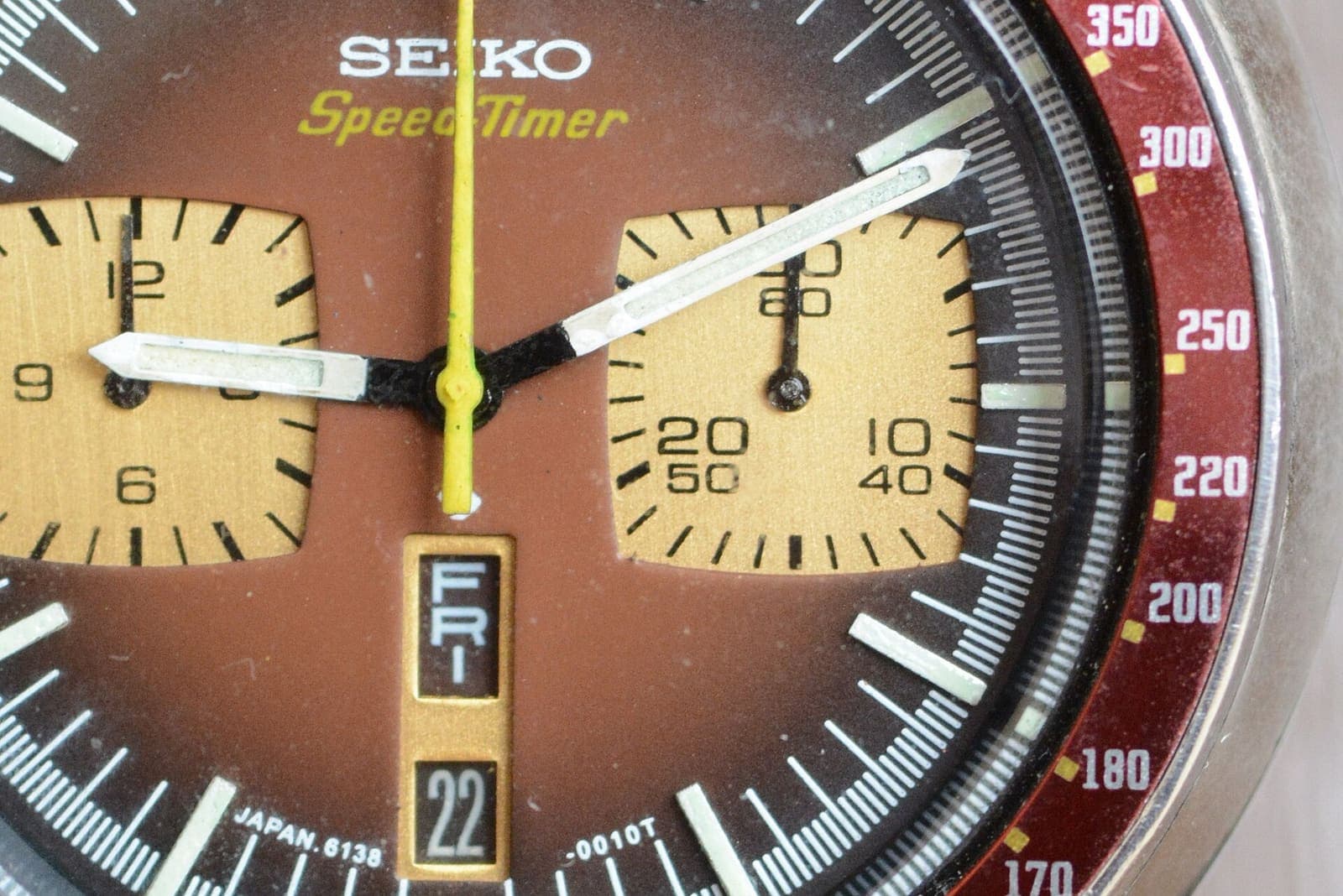
Browse Omega Seamaster cal. 552 or date-window Omega Seamaster 562 listings while you read, and you'll quickly see how much variation there is. If you're more drawn to other brands, our guides to buying a vintage Rolex and vintage Seiko cover their model-specific traps.
What drives the price
Two watches with the same reference can sell for very different amounts. The biggest factors, roughly in order:
- Originality — original dial, hands, crown and movement for that reference
- Dial condition — honest, even aging beats spotting, water damage or a restoration
- Case condition — sharp, unpolished edges versus a soft, over-polished case
- Running condition — a recent documented service versus "runs, needs service"
- Desirable variations — certain dial styles, colors or case designs carry a premium
- Extras — original box, papers or bracelet, which are rare on most 1960s watches
Keep these in mind as you work through the checks: each one tells you which column of the price box a watch really belongs in.
1. Is the dial original?
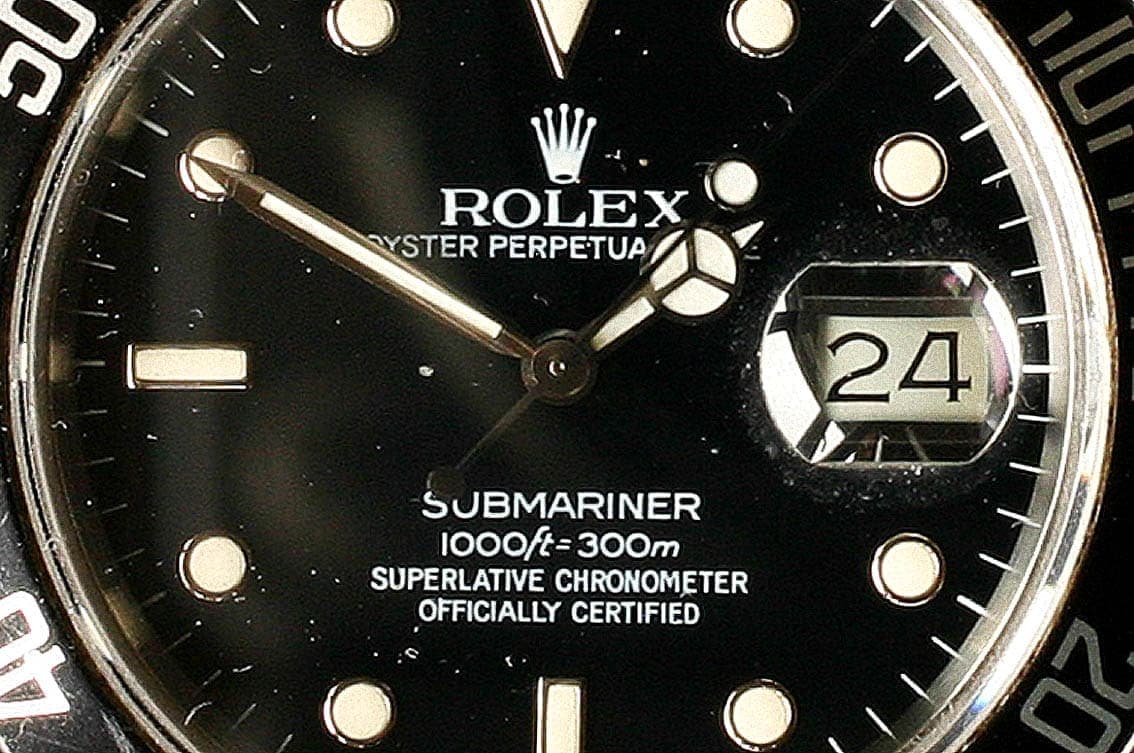
A redial is a dial that's been refinished or repainted. Redials sell for a fraction of original dials. Warning signs include printing that looks too crisp or slightly off-center, fonts that don't match known examples, and a suspiciously perfect dial on an otherwise worn watch.
Redials are usually made by stripping the original finish, repainting the dial and reprinting the text, sometimes with re-set markers. The giveaways are in the details:
- Logos and text that are slightly too bold, too thin or misspelled
- A printed logo where that model should have an applied one
- Minute-track lines that don't meet the markers cleanly
- Missing small text, such as the "Swiss Made" line at 6 o'clock
Compare the dial with several confirmed originals of the same reference, not just one photo.
2. Do the parts belong together?
A frankenwatch is assembled from parts of different watches — a case from one, a movement from another, hands from a third. Compare the reference number on the case back with the movement caliber. Collector forums and reference sites list which calibers went into which references.
Many brands also stamp a reference number inside the case back and a serial on the movement. On Omegas, the movement serial gives an approximate production date that should fit the case reference. A 1950s movement in a late-1960s case is a red flag.
3. Ask for a movement photo
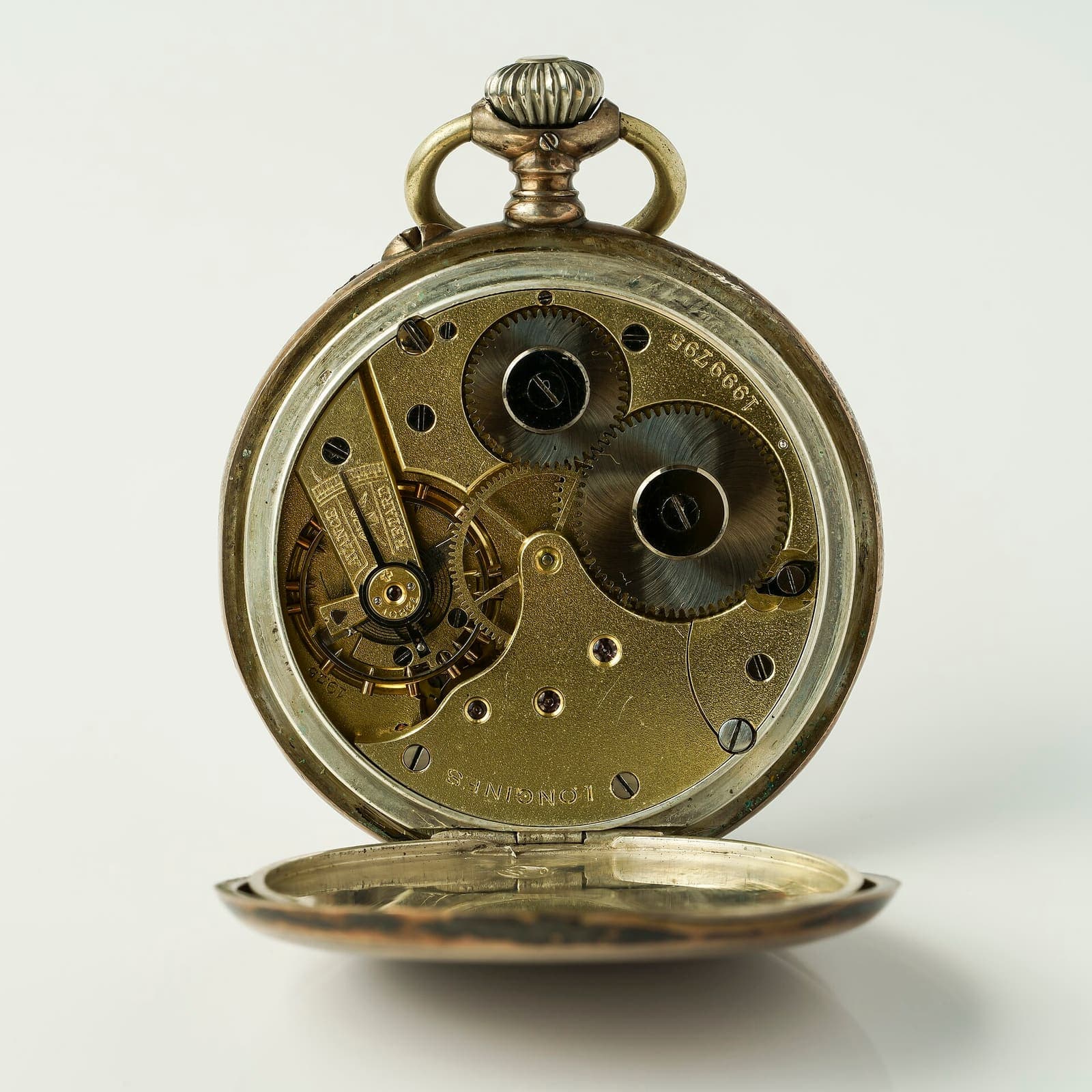
This is the single most useful question you can ask a seller. A clear photo of the movement tells you whether it's the correct caliber, whether it's clean or rusty, and whether it has been serviced. No movement photo on a pricey watch is a red flag.
Look for rust on screws and plates, scratched screw heads from careless work, missing screws and dirt or debris. Once rust gets into a movement, it can be expensive to fix.
4. Check the service history
Mechanical watches need servicing every several years. A full service on a vintage piece can cost more than you'd expect, so factor it into your price. A recent documented service is worth real money.
As a rough guide, a basic service on a simple vintage automatic at an independent watchmaker often runs a few hundred dollars. Chronographs, rare calibers or watches needing parts can cost much more. Ask who did the service and whether there's a receipt; "recently serviced" with no details is just a phrase.
5. Look at the lume and hands
Old luminous material ages to a warm cream or brown. Bright white lume on a 1960s watch usually means replaced hands or relumed markers — not a deal-breaker, but it affects value. Mismatched lume between hands and dial is another clue to replacement parts.
Check the hand style too. Many references had one specific hand shape, and replacement hands in the wrong style or length are common. If the minute hand doesn't reach the minute track, it may not belong there.
6. Mind the case condition
Heavy polishing softens sharp case edges and bevels, which collectors care about. Look for crisp lines where the lugs meet the case. Deep pitting or plating wear-through on gold-plated cases can't be undone.
Check the crown as well. Original signed crowns are often worn away or replaced with generic parts, and a correct crown adds value. Note whether the case is solid gold, gold-filled, gold-capped or steel — the listing title doesn't always say, and it makes a big difference to price.
7. Know the seller and your protections
Read the seller's feedback, especially for other watch sales. Check the return policy. For higher-value watches, look for eBay's Authenticity Guarantee badge, which adds an independent inspection before the watch reaches you.
Before you bid, look up what the same reference has actually sold for, not what sellers are asking. Filter eBay results to sold items and compare watches in similar condition.
Grail Hunt tip: If a deal looks too good on a famous model, assume there's a reason — and find out what it is before you buy.
Photos and questions to ask
A good seller won't mind these requests:
- Sharp daylight photos of the dial, straight on and at an angle
- The case back, inside and out, and the movement
- Side views of the case, lugs and crown
- A short video of the watch running, and of the date changing if it has one
Then ask: Does it keep reasonable time? When was it last serviced? Which parts are original? Has the dial been restored?
A word on water resistance
Don't trust the depth rating on a vintage watch's dial or case back. Gaskets dry out and crowns wear, so assume a vintage watch is not water resistant until it has been serviced and pressure tested.
Quick checklist
- Dial original and consistent with known examples
- Case reference matches the movement caliber
- Clear movement photo, no rust
- Service history known, or service budgeted
- Lume and hands consistent and correct for the model
- Case edges crisp, crown and case material confirmed
- Seller has watch-specific feedback and a return policy
The bottom line
Original dial, correct movement, honest case, and a seller who'll answer questions. Get those four right and you'll be wearing a piece of history instead of an expensive lesson.
The story behind it
More Vintage Watches guides