Vintage Seiko Buying Guide: Divers, Seiko 5s, Mods and Redials
Vintage Seikos are fun, affordable and widely modified. Learn to read the case back, spot redials and aftermarket parts, and buy an original with confidence.
By The Grail Hunt · July 7, 2026 · 6 min read
This guide contains eBay affiliate links. If you buy through them we may earn a commission, at no extra cost to you. Read our affiliate disclosure.
Vintage Seiko watches are a favorite entry point for collectors: tough automatic movements, great designs and far more history than their prices suggest. But Seikos are also among the most modified and redialed watches on the market. Here's how to find an honest one.
Know the popular lines
A few families dominate the vintage Seiko world:
- Seiko 5 — the everyday automatic line, typically with a day-date display and a recessed crown at 4 o'clock. Countless variations exist, which makes it easy to collect and easy to fake.
- Dive watches — Seiko's divers, from the 1960s onward, have a devoted following. Chunky cases, rotating bezels and nicknames earned from collectors (like the "Turtle") are part of the appeal.
- Chronographs and dress watches — including higher-end lines like Grand Seiko and King Seiko, which reward careful research.
Start with one line you like and learn what originals look like before you buy.
References collectors look for
Within those lines, a handful of references come up again and again:
- 6217-8000 "62MAS" (1965) — Seiko's first dive watch. Scarce, expensive and heavily researched; buy only with expert help.
- 6105 divers — the 6105-8000/8009 and the cushion-cased 6105-8110/8119, the latter nicknamed "Captain Willard" after its appearance in Apocalypse Now. Strong demand, and a frequent target for replacement dials and bezels.
- 6309-7040 and 6309-7049 "Turtle" — the cushion-cased automatic diver made from 1976 to 1988. Plentiful, robust and the price box above is for this one. It's the classic first vintage Seiko diver: browse Seiko 6309 diver listings to see how much originality varies.
- 6139 chronographs — among the earliest automatic chronographs (1969). The yellow-dial 6139-6000/6002 is known as the "Pogue" after the astronaut who wore one on Skylab 4. Look at Seiko 6139 chronograph listings and you'll see why dial condition matters so much.
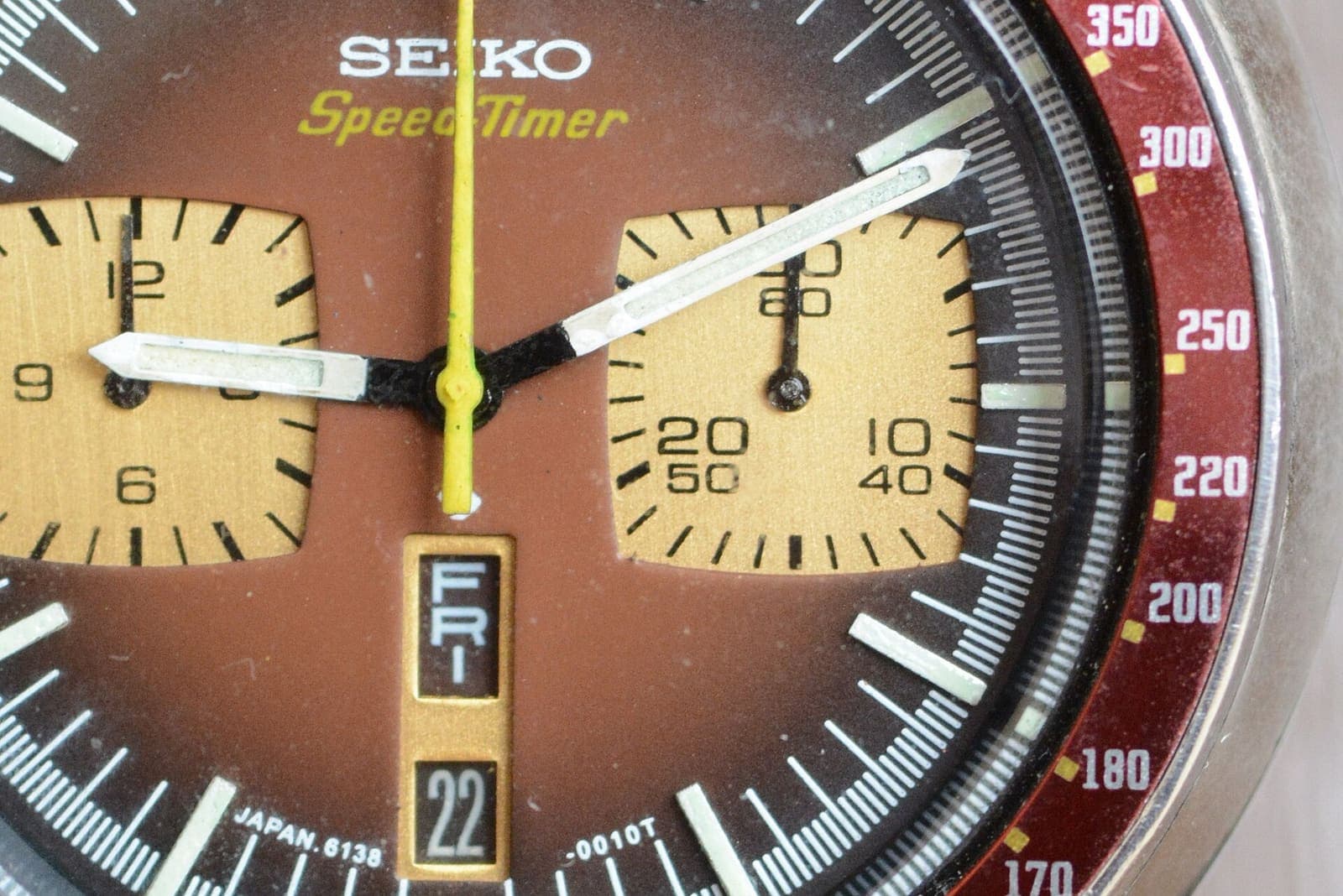
- 6138 chronographs — including the chunky "Bullhead" (6138-0040).
- King Seiko and Grand Seiko — such as the 61GS automatics and 45GS hand-wound hi-beat models, prized for finishing and sharp case lines.
Read the case back
Most vintage Seikos carry a caliber-case number on the case back, written as two four-character groups, such as a number in the 6309 or 7S26 family followed by a case code. The first group identifies the movement caliber, and the second identifies the case design. Use it to check that:
- The movement inside matches the caliber on the back
- The dial, hands and bezel match what that case should have
Many vintage Seiko dials also carry a small printed code near 6 o'clock that should agree with the case back. A dial code from a different model is a strong sign of a swap.
Many Seiko serial numbers also encode the production date: the first digit is typically the last digit of the year, and the second indicates the month. Because a single digit repeats every decade, combine it with the model's known production years.
What drives value
For a given reference, price comes down to a few things:
- Original dial and hands — the single biggest factor. Honest wear beats a fresh-looking replacement.
- Original bezel insert and crystal — divers lose value with aftermarket inserts, and many have them.
- Case condition — crisp edges and original brushing versus heavy polishing.
- Running condition and service history
- Extras — original bracelets, straps, boxes and papers are uncommon, so they add a premium.
Mods vs. originals
Seikos are hugely popular with modders, who swap in aftermarket dials, hands, bezels, sapphire crystals and even movements. A well-done mod can be a great watch to wear, but it's not an original vintage piece, and it shouldn't be priced as one. Look for:
- Dials with missing or unusual text, or logos that look slightly off
- Sapphire crystals or bezel inserts in styles the factory never offered
- Movements that don't match the case-back caliber
- Listing words like "custom," "modded" or "homage"
Honest sellers disclose mods. If the listing doesn't mention them but the watch looks "too perfect," ask.
Beware the redial
Redials — repainted or reprinted dials — are especially common on inexpensive vintage Seiko 5s. Warning signs include:
- Printing that's thick, blurry or uneven
- Dial colors or patterns that don't appear in any reference photos
- A spotless dial on a watch with a scratched case and worn bracelet
- Several near-identical watches from the same seller
Compare the dial carefully against known originals on collector forums and reference sites.
Redials are typically made by stripping the old finish, repainting the dial and reprinting the text, then fitting refinished or generic hands. That's why mismatched lume is such a useful clue: aged lume on the hands next to fresh-looking markers, or the reverse, suggests something was replaced.
Grail Hunt tip: Ask for a clear photo of the case back and a movement shot. If the caliber on the case back doesn't match the movement, you're looking at a franken or a mod — price it that way.
Photos and questions for the seller
Before you bid, ask for:
- A sharp, straight-on dial photo in daylight, plus angled shots that show the printing and lume
- The case back and a clear movement photo
- Side views of the case, lugs and crown
- Close-ups of the bezel insert and crystal on divers
Then ask: Which parts are original? Has the dial or any lume been touched? When was it last serviced? Does the bezel rotate and click properly?
Check condition and running
Seiko movements are durable, but old ones still need care. Ask:
- Does it run, wind and set properly? Does the day-date change?
- When was it last serviced?
- Is the case heavily polished, or are the edges still crisp?
- For divers, has water resistance been tested? Assume it hasn't unless proven otherwise.
Original bracelets, crowns and bezel inserts add value, so ask which parts are original.
A full service on a vintage Seiko automatic usually costs a few hundred dollars at an independent watchmaker, and chronographs cost more. On a $300 watch, that can be a meaningful share of the price, so factor it in. Never trust the "150m" on a vintage diver's dial: have it pressure tested after service before it goes near water.
Buy safely online
Buy from sellers with strong feedback on watch sales, and read the listing for disclosures about mods and replacement parts. Ask for real photos of the specific watch, not stock images. Pay through the platform so buyer protection applies, and have a watchmaker look it over after purchase. Before you set a maximum bid, look up what the same reference has actually sold for — our guide to using sold listings walks through it.
Quick checklist
- Case-back caliber matches the movement
- Dial code and style correct for the case
- Lume on hands and dial aged consistently
- Bezel insert and crystal original or disclosed as replaced
- No undisclosed mods
- Service history known, or service budgeted
For checks that apply to any vintage watch, see our vintage watch checklist.
The bottom line
Pick a line, learn its originals, and let the case back guide you. Verify the caliber, question dials that look too good, and know a mod when you see one. Do that and you'll find a vintage Seiko with the history you're actually paying for.
More Vintage Watches guides