Antique Pocket Watches: A Buyer's Guide to Cases, Winding and Grades
Key-wind or stem-wind, hunter or open face, gold-filled or solid — learn what matters when buying an antique pocket watch online, and what to ask the seller.
By The Grail Hunt · July 6, 2026 · 3 min read
This guide contains eBay affiliate links. If you buy through them we may earn a commission, at no extra cost to you. Read our affiliate disclosure.
Antique pocket watches pack a lot of history into your palm: hand-finished movements, engraved cases and enamel dials made generations ago. They're also full of variables that can confuse a first-time buyer. Here's how to read a listing and choose a watch you'll be glad to own.
Key-wind vs. stem-wind
Older pocket watches are usually key-wind: you wind them and set the hands with a small separate key, often through a hole in the case or movement. Stem-wind watches — wound by turning the crown — became the norm in the later 19th century.
Setting methods vary too:
- Pendant set — you pull out the crown to set the hands, like a modern watch
- Lever set — you open the crystal or bezel and pull out a small lever before turning the crown
Key-wind watches have real charm, but make sure the key is included or that you can find one in the right size.
Open face vs. hunter case
- An open-face case leaves the dial visible behind the crystal. The crown typically sits at 12 o'clock.
- A hunter case has a hinged lid that protects the dial, opened by pressing the crown. In a hunter movement, the crown usually sits at 3 o'clock relative to the dial.
Check that the movement suits the case. A hunter movement fitted to an open-face case — or vice versa — leaves the seconds dial in an odd position, a clue that parts have been swapped. Hunter lids should close firmly and the hinges shouldn't be loose.
Railroad-grade watches
In the late 19th and early 20th centuries, American railroads set standards for the watches their employees carried. Requirements varied by railroad and era, but railroad-grade watches generally had:
- Open-face cases with the crown at 12
- Lever setting, to prevent accidental time changes
- High-jeweled movements, typically 17 jewels or more
- Adjustments for temperature and position
- Clear, bold Arabic numerals
Makers such as Hamilton, Elgin, Waltham, Illinois and Ball produced railroad models. The movement's markings and serial number help confirm what you're buying. Many makers' serial records can be looked up to date a movement and identify its grade.
Gold-filled vs. solid gold cases
Case metal matters a great deal to value. Look inside the case back:
- Solid gold cases are stamped with a karat mark, such as 14K or 18K.
- Gold-filled cases have a layer of gold over base metal. Many are marked with words like "warranted" and a number of years, which is a gold-filled marking, not a karat stamp.
- Silver cases may be marked sterling or coin silver, and base-metal cases may be nickel or similar alloys.
Be cautious with scrap-value claims and verify metal with a jeweler's test if it matters to you.
Check the movement and dial
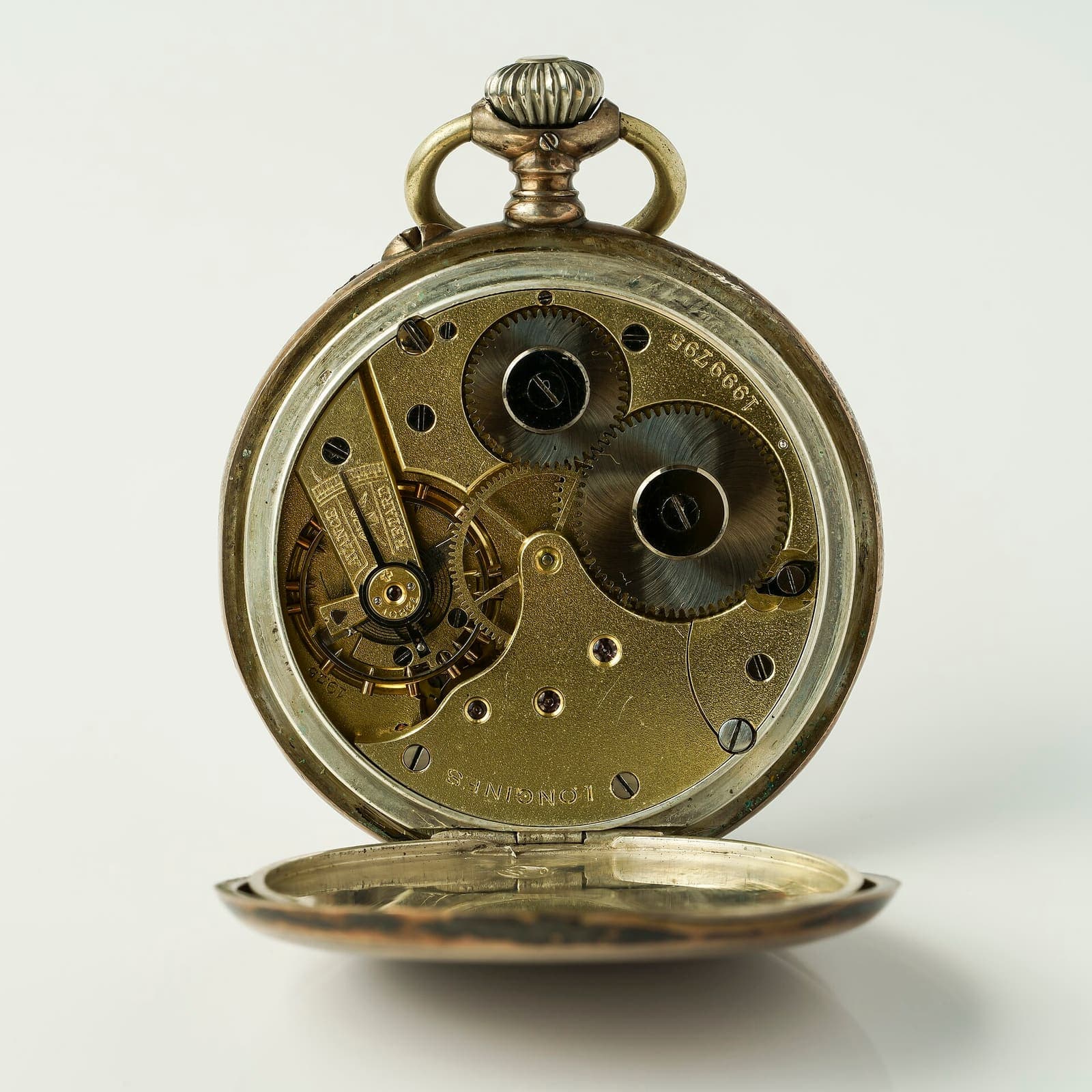
The movement is the heart of the watch. Ask for a clear photo with the case open, and look for:
- Rust on steel parts and the balance area
- Scratches or pry marks from past repairs
- A balance wheel that swings freely when the watch is gently moved
Enamel dials are prone to hairline cracks and chips, which affect value. Also check the crystal, hands and the condition of the bow (the ring at the top).
Grail Hunt tip: Ask the seller whether the watch runs, how long it runs on a full wind, and whether it keeps time. "Runs" and "keeps good time" are two very different things.
Buy safely online
Choose sellers with strong feedback on watch sales. Ask for photos of the movement, the inside case back and the dial under good light. Read the return policy closely, pay through the platform, and budget for a cleaning and service by a watchmaker experienced with antique pieces.
The bottom line
Know how your watch winds and sets, match the movement to the case, understand the difference between solid gold and gold-filled, and always ask to see the movement. With those checks, an antique pocket watch can be a beautiful, working link to the past.
More Vintage Watches guides