Vintage Tin Toys and Wind-Ups: Markings, Mechanisms and Reproductions
Lithographed tin toys charm collectors with color and motion. How to read country markings, check mechanisms, judge rust and spot modern reproductions.
By The Grail Hunt · July 12, 2026 · 3 min read
This guide contains eBay affiliate links. If you buy through them we may earn a commission, at no extra cost to you. Read our affiliate disclosure.
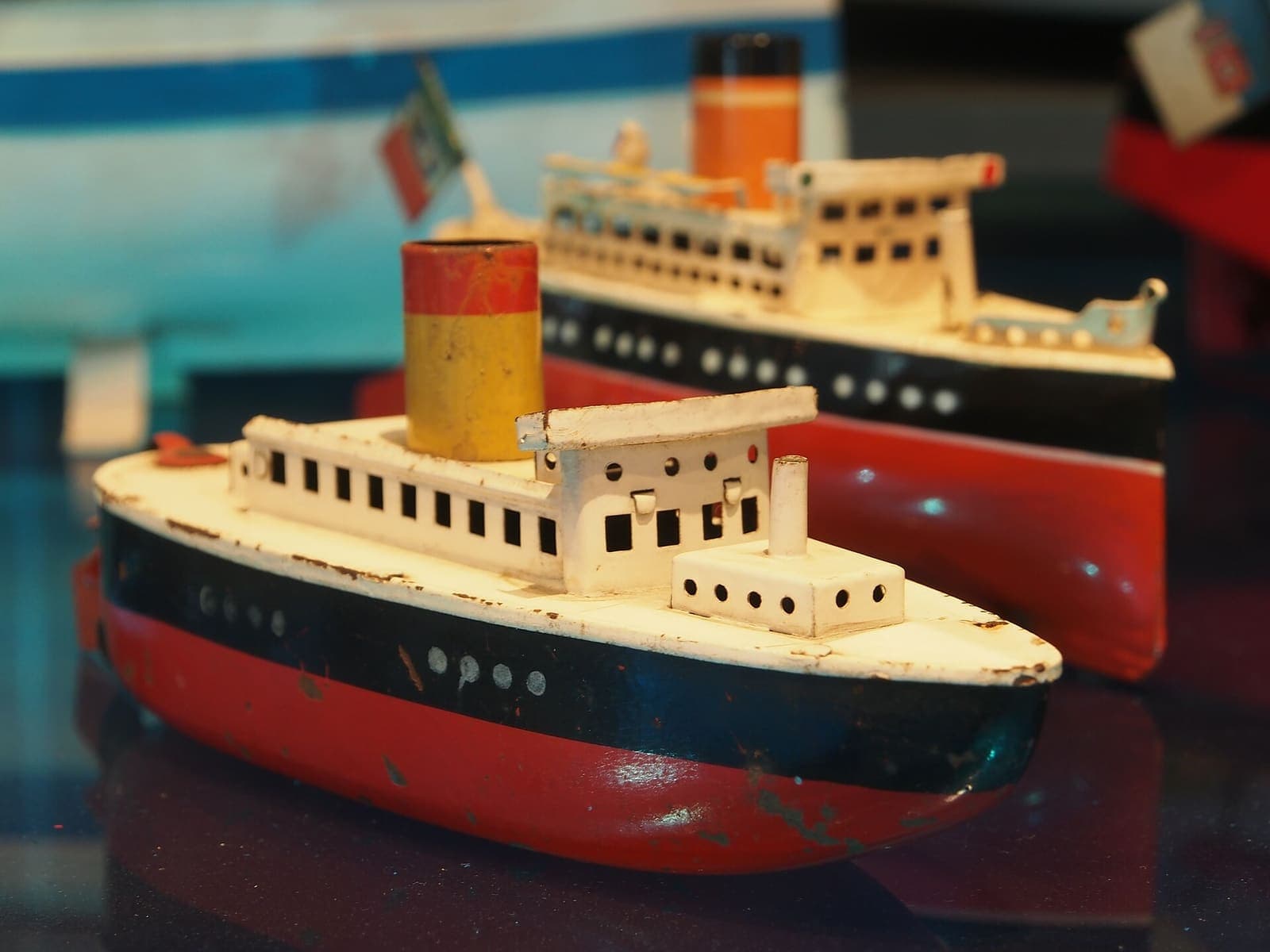
Vintage tin toys have a charm that plastic rarely matches: bright printed graphics, clever mechanisms and a satisfying clatter when they move. From early German clockwork toys to postwar Japanese robots, they're a colorful and historic collecting field. Here's how to buy them wisely.
Lithographed tin
Most vintage tin toys were made with lithographed tin — sheet metal printed with colorful designs before being cut, shaped and assembled. Many were held together with tabs and slots rather than screws or welding. When examining a toy, look for:
- Crisp, vivid lithography without heavy scratches or fading
- Tabs that are intact and haven't been repeatedly bent
- Original parts, such as rubber tires, wind-up keys and flags
Scratches and wear in the lithography are hard to repair invisibly, so original surface condition matters.
Know the mechanisms
Tin toys move in a few main ways:
- Wind-up (clockwork) — a spring wound with a key or a fixed crank. Ask whether it still runs; broken or overwound springs are common.
- Friction — a flywheel that spins when you push the toy along a surface, then keeps it moving.
- Battery-operated — especially popular for postwar Japanese toys, often with lights, sounds and multiple actions.
Working mechanisms add appeal. For battery toys, always ask about the battery compartment — old leaking batteries can cause corrosion that damages contacts and wiring.
Read the country markings
Markings help date a toy and identify its origin. Some well-known markings include:
- Germany — a major producer of tin toys before World War II, with several respected makers
- Made in Occupied Japan — used on Japanese exports during the postwar occupation period, roughly the late 1940s to early 1950s
- Japan — Japanese tin toys, including many battery-operated cars and robots, were widely exported in the 1950s and 1960s
- USA — American companies also produced tin toys, often with cheerful lithographed designs
Markings can appear on the base, the side or under a tab. A toy with no markings isn't automatically a fake, but it needs closer inspection.
Spotting reproductions
Reproductions and modern tin toys in a vintage style are common. Many are sold honestly as new toys, but some are aged or described vaguely to suggest they're old. Red flags include:
- Lithography that's too bright and sharp for a toy that's supposedly decades old
- Modern markings, or markings that look scratched off
- Unusually thin or shiny metal
- Modern screws or plastic parts where originals used tin or rubber
- Artificial aging — uniform scuffing or rust that looks too even
Compare against photos of confirmed originals before paying a premium.
Rust, dents and condition
Condition drives value for tin toys. Common issues include:
- Rust — surface spots, rust on edges or, worse, rust that has eaten through the metal
- Dents and bent tabs
- Paint and lithography loss
- Missing parts — keys, antennas, drivers or tires
- Repainting or touch-ups, which should be disclosed
Original boxes add significant appeal, especially for Japanese battery toys, where colorful box art is a collectible in itself.
Grail Hunt tip: Ask the seller to take a short video of the toy's mechanism working, plus a photo of the battery compartment or key slot. It shows you both function and hidden corrosion before you commit.
Buying safely online
Request photos of all sides, the base, any markings and the inside of battery compartments. Ask whether the toy has been repainted, repaired or fitted with replacement parts, and keep all answers in eBay messages. Confirm how it will be packed — tin dents easily in transit, so ask for plenty of padding.
The bottom line
Learn the mechanisms, read the markings, inspect for rust and repairs, and be wary of reproductions. A well-preserved tin toy is a small piece of design history, and the right one will bring a smile every time it moves.
More Die-Cast Cars guides