Etching, Lithograph or Poster? How to Identify an Original Print
Original prints and photomechanical reproductions can look alike online. Learn to read plate marks, ink, paper and edition details before you buy.
By The Grail Hunt · June 25, 2026 · 3 min read
This guide contains eBay affiliate links. If you buy through them we may earn a commission, at no extra cost to you. Read our affiliate disclosure.
An original print isn't a copy of a painting — it's an artwork created by printing from a plate, block, stone or screen the artist worked on directly. Etchings, woodcuts, lithographs and screenprints can be affordable ways to own real work by important artists. The catch is that photomechanical reproductions — posters and "limited edition" offset prints — are everywhere, and they often wear the same labels. Here's how to tell them apart.
The main printmaking methods
Each technique leaves its own physical evidence:
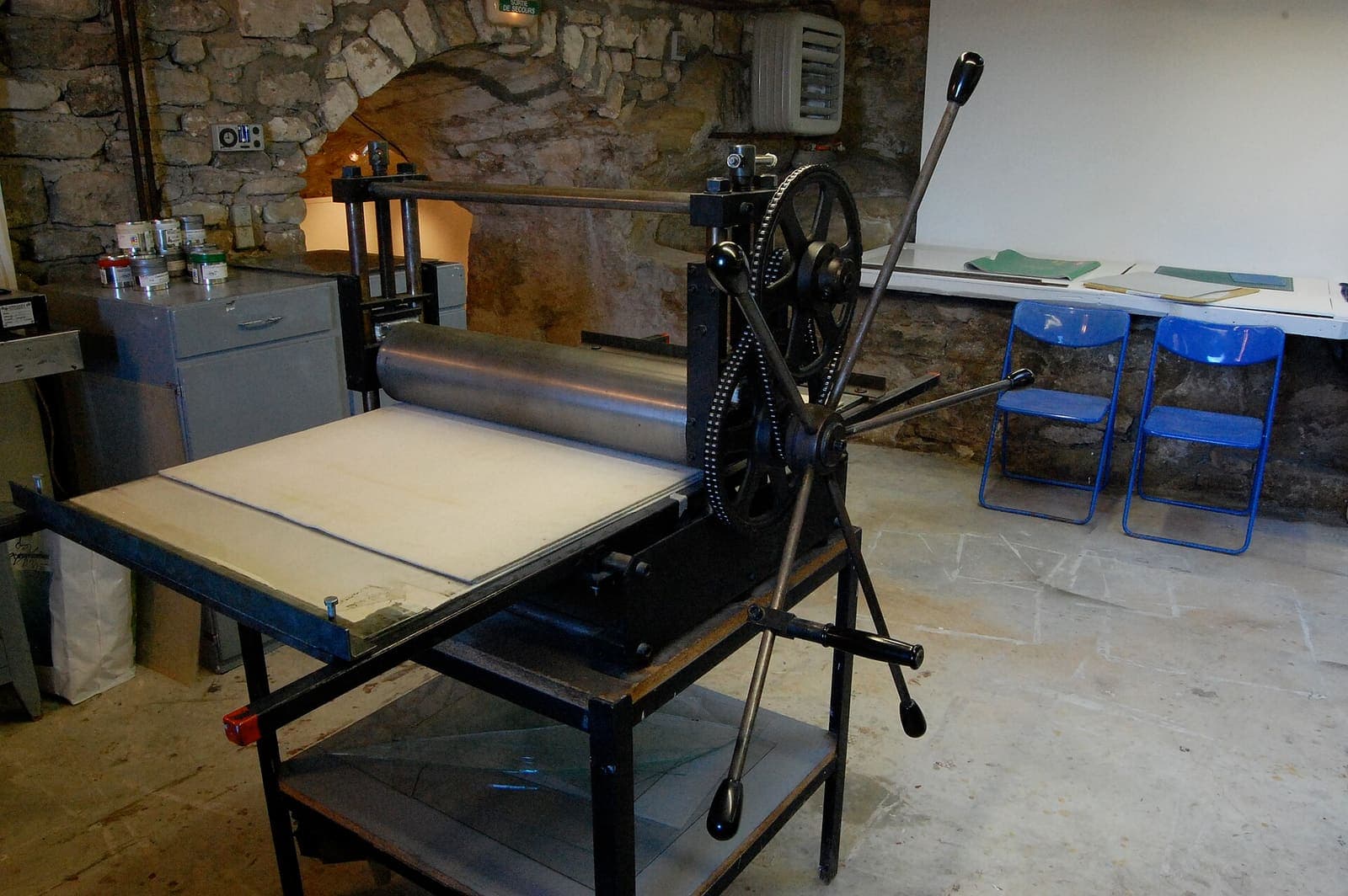
- Etching and engraving (intaglio). Lines are cut or bitten into a metal plate, ink is pushed into them, and damp paper is pressed hard against the plate. This creates a plate mark — an embossed rectangle around the image — and ink that sits slightly raised on the paper. Drypoint lines often show a soft, velvety burr.
- Woodcuts and linocuts (relief). Ink sits on the raised surface of a carved block. Look for slight embossing visible on the back and wood grain texture in solid areas.
- Lithographs (planographic). The image is drawn on stone or a plate and printed from a flat surface. There's no plate mark, but hand-drawn lithographs show irregular, crayon-like marks rather than a regular dot pattern.
- Screenprints (serigraphs). Ink is forced through a stencil on a mesh screen. Colors are laid in distinct, flat layers, often slightly thick, with crisp edges.
Spotting photomechanical reproductions
The single most useful tool is a loupe or strong magnifier. Commercial offset printing breaks images into a regular pattern of tiny dots — often a rosette of cyan, magenta, yellow and black. If you see that uniform dot screen across the whole image, it's a reproduction, however it's signed or numbered.
Other warning signs:
- No plate mark on something described as an etching
- Ink that's perfectly flat, with no texture where intaglio or screen ink would be raised
- Glossy or coated paper unlike traditional printmaking papers
- The image reproduced from a painting, with brushstroke texture appearing in dots
Editions, signatures and restrikes
Many 20th-century and later prints are signed and numbered in pencil, such as "25/100." Older prints are frequently unsigned or signed in the plate, and numbering wasn't standard practice until relatively recently — so an unnumbered old print isn't automatically suspect. Other terms you'll see:
- Artist's proofs — impressions outside the numbered edition
- Restrikes — later impressions pulled from the original plate, often long after the first edition or after the artist's death. They're real prints, but usually worth less, and wear on the plate can show as weak, grayish lines.
- "After" or "in the manner of" — someone else's interpretation of the artist's work
Remember that a pencil signature can be added to anything. The print has to be right first.
Paper tells a story
Traditional printmaking papers often have deckle edges, watermarks you can see when held to light, and, in older laid papers, fine parallel chain lines. Check for toning, foxing (brown spots), mat burn from acidic mounts, stains, tears and trimmed margins. Generous, untrimmed margins generally help value.
Grail Hunt tip: Ask the seller for a close-up taken through a loupe or macro lens, plus a raking-light photo showing the plate mark and paper texture. Those two images answer most questions in seconds.
Buying safely online
Ask for full photos of the front and back, the whole sheet out of the frame if possible, and exact image and sheet dimensions. Check the artist's catalogue raisonné when one exists — it records authentic editions, sizes and states. Pay with buyer protection, and make sure prints ship flat between rigid boards, never rolled or folded, with framed pieces protected against glass breakage.
The bottom line
Identify the technique, check for plate marks and texture, and look for dot screens under magnification. Treat signatures and numbers as secondary to the print itself, and you'll buy original prints with real confidence.
More Art guides