Error Banknotes: How to Spot Real Printing Mistakes and Fake Errors
Misaligned prints, cutting errors, inverted backs and gutter folds can turn a bill into a collectible. Here's how genuine errors happen and how fakes are made.
By The Grail Hunt · August 2, 2026 · 4 min read
This guide contains eBay affiliate links. If you buy through them we may earn a commission, at no extra cost to you. Read our affiliate disclosure.
Modern U.S. paper money is printed with remarkable precision, which is exactly why mistakes are so exciting. Every so often a sheet folds, shifts or skips a step, and a note with a dramatic error escapes into circulation. These error notes are a lively corner of paper-money collecting — and, because they can carry real premiums, a target for people who try to create errors after the fact.
1. How U.S. notes are printed
Understanding the process makes it much easier to recognize real errors. U.S. currency is printed in large sheets in stages:
- The back is printed first
- The face is printed next
- The overprint — serial numbers, seals and other details — is added in a later step, often called the third print
- The sheets are then cut into individual notes
A genuine error happens when something goes wrong at one of those stages. Every legitimate error should make sense in light of that sequence.
2. Common types of error notes
- Misaligned or shifted printing — The design or overprint sits noticeably off-position. Minor shifts are common; dramatic ones are more desirable.
- Cutting errors — The sheet was cut off-register, so the note shows part of an adjacent note along one edge.
- Inverted backs — The back is printed upside-down relative to the face.
- Missing prints — Most often a missing third print, where serial numbers and seals are absent. Missing face or back prints are rarer.
- Gutter folds — A crease formed in the paper before printing. When unfolded, it leaves an unprinted stripe running through the design.
- Fold-overs — A corner or edge folded over during printing, leaving part of the note blank and design printed on the wrong side of the flap.
- Offsets — Ink transferred from another sheet, leaving a mirror-image impression.
- Mismatched serial numbers — The two serial numbers on the face don't match.
Size and drama matter. A bold error that's obvious from across the room is generally more desirable than one you need a magnifier to find.
3. How fake and manufactured errors are made
Because errors command premiums, some people try to create them:
- Chemically removed prints. Serial numbers or seals can be bleached or removed to mimic a missing third print. Look for discolored, weakened or roughened paper where ink should be, and for faint traces of the removed design.
- Trimmed notes. A note can be cut down to fake a cutting error. Genuine cutting errors usually show part of the adjacent note's design and are the correct overall size. A note that's noticeably small or oddly shaped is suspicious.
- Added ink or printing. Overprints can be added with modern printers, but the ink and detail rarely match genuine currency printing under magnification.
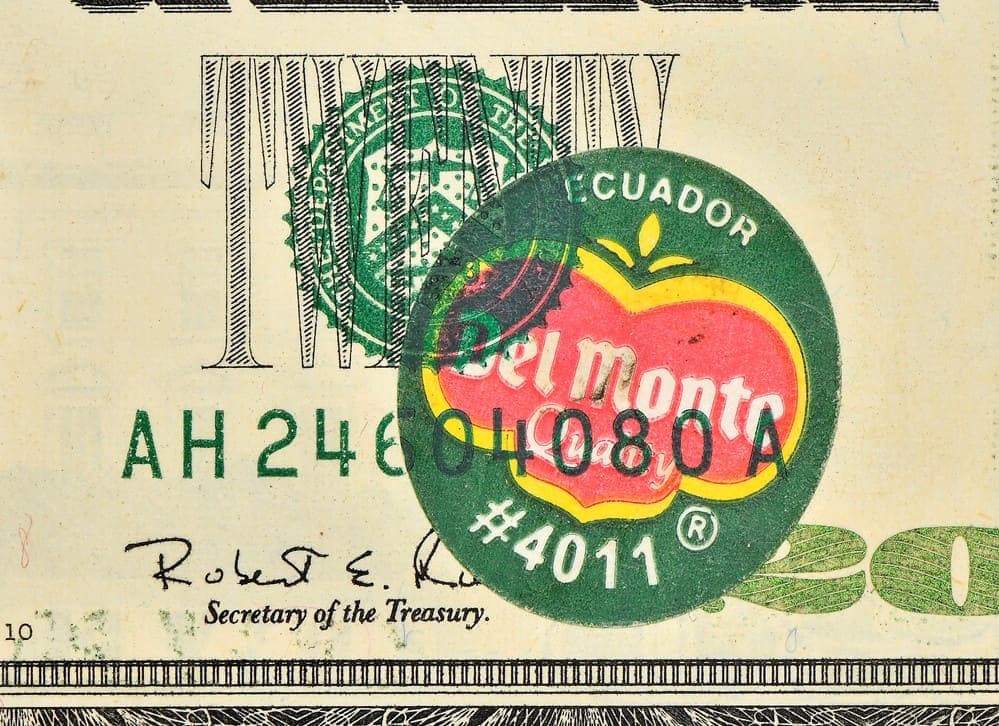
- Damage passed off as error. Ink stains, tape residue and post-production folds are not mint errors.
Genuine errors also follow logic. An error that couldn't have happened given the printing sequence is a major red flag.
Grail Hunt tip: For a claimed missing third print, ask for a photo of the note held up to a light and a close-up of where the seals and serials should be. Chemical removal usually leaves the paper looking thin, blotchy or roughened.
4. Grading and certification
Error notes are graded like other paper money, typically on a 1–70 scale where condition terms run from heavily circulated up to Gem Uncirculated. PMG and PCGS Banknote are the most widely recognized grading services. They authenticate the error, note its type, and assign a grade. Designations such as EPQ (PMG) or PPQ (PCGS) indicate that the paper is original and hasn't been pressed or washed.
Condition still matters: a crisp uncirculated error note is generally more desirable than a heavily folded one showing the same mistake.
5. Buying error notes online
- Ask for full, uncropped photos of both sides, so you can judge size and margins
- Request close-ups of the error area and any part of the adjacent note that shows
- Ask whether the note has been pressed, washed or repaired
- For higher-value errors, buy certified by PMG or PCGS and verify the certification number
- Check seller feedback on paper money specifically, and pay through a platform with buyer protection
The bottom line
Real error notes are the product of a printing process that went off the rails in a way that makes sense. Learn the stages, recognize the common error types, and be skeptical of anything that looks trimmed, bleached or impossible. Buy the dramatic pieces certified, and you'll enjoy one of the most fun corners of paper-money collecting.
More Paper Money guides