Vintage Magic: The Gathering and the Reserved List: A Collector's Guide
Alpha, Beta and Reserved List cards are among the most sought-after in gaming. Learn the editions, how counterfeits are caught and how to buy vintage Magic safely.
By The Grail Hunt · July 21, 2026 · 3 min read
This guide contains eBay affiliate links. If you buy through them we may earn a commission, at no extra cost to you. Read our affiliate disclosure.
Magic: The Gathering launched in 1993 and created the modern trading card game. Its earliest cards are now some of the most prized collectibles in the hobby — and a big part of their appeal is a policy called the Reserved List. Here's how vintage Magic works and how to buy it without getting burned.
What the Reserved List is
In the mid-1990s, Wizards of the Coast created the Reserved List, a list of cards the company pledged not to reprint in regular, tournament-legal form. Many of the most iconic early cards are on it, including the famous Power Nine — Black Lotus, the five Moxen, Ancestral Recall, Time Walk and Timetwister — as well as the original dual lands.
Because supply of these cards is fixed, they're a cornerstone of vintage Magic collecting. Wizards has occasionally released products with different card backs that aren't tournament legal, so always confirm what a listing actually is.
The early editions, in brief
Magic's earliest printings share much of the same card pool but differ in ways collectors care about:
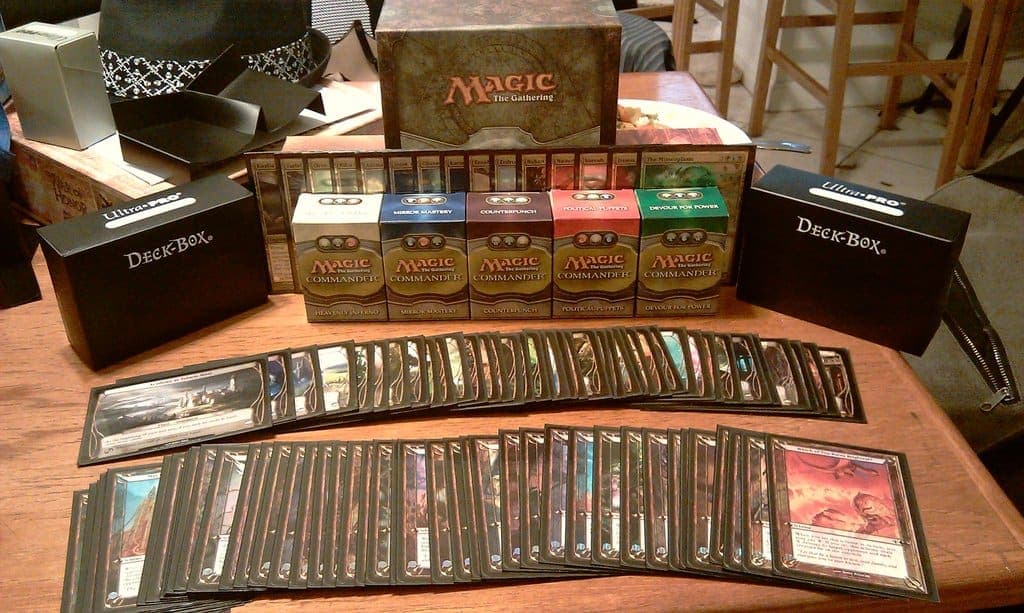
- Alpha — the very first print run. Black borders and noticeably more rounded corners than later printings.
- Beta — the second print run, also black-bordered, with corners closer to later cards.
- Unlimited — the third printing, with white borders, and generally more available than Alpha or Beta.
- Collectors' Edition and International Edition — special printings with square corners and gold-bordered backs, not tournament legal.
- Revised and later core sets — white-bordered reprints of many early cards.
The same card can differ enormously in desirability from one edition to the next, so identify the edition precisely.
Counterfeits and proxies
Vintage Magic is a major target for counterfeiters. You'll also see proxies — stand-in cards used for casual play. Proxies aren't a problem when they're honestly labeled, but they're sometimes resold as genuine.
Common warning signs:
- Colors that are too dark, too saturated or slightly washed out.
- Blurry text or mana symbols, or fonts that don't match genuine cards.
- Back design problems, such as the wrong shade or poor detail.
- Card stock that feels too glossy, too stiff or too flimsy.
- Wrong corner shape for the claimed edition.
The light and loupe tests
Two non-destructive checks are popular with collectors:
- The light test. Genuine Magic cards are made with a dark inner layer that blocks much of a bright light shone through them. Many fakes let far more light through. Compare against a genuine common card from a similar era.
- The loupe test. Under magnification, genuine cards show the rosette pattern of tiny dots typical of offset printing. Fakes often show irregular, blurry or inkjet-style patterns instead.
Avoid destructive "tests" like bending cards; they can damage genuine cards and won't impress any seller.
Grail Hunt tip: Keep a known-genuine common card from an early set as your reference. Comparing a questionable card side by side under the same light and loupe reveals differences that photos alone often hide.
Grading vintage Magic
PSA, Beckett (BGS) and CGC all grade Magic cards. Grading authenticates the card, confirms the edition and assigns a condition grade. For high-value Reserved List cards, graded examples offer the strongest protection. Always verify the cert number on the grader's website.
Condition matters enormously. Vintage Magic was made to be played, so shuffling wear, whitened edges, scratches and dinged corners are common. High-grade early cards are genuinely scarce.
Buying safely online
- Ask for high-resolution photos of front and back, out of the sleeve.
- Request an angled photo to show surface scratches and gloss.
- Ask the seller to confirm the edition and whether they've performed a light or loupe test.
- Favor graded cards for expensive purchases, and use listings with buyer protection.
- Compare with sold listings for the exact card, edition and condition.
The bottom line
Vintage Magic and the Reserved List offer a fixed supply of gaming history. Learn the editions, use light and loupe comparisons, watch for proxies and counterfeits, and lean on grading for the big purchases. That's how you build a collection of the real thing.
More Pokémon & TCG guides